
EV Charging in a Detached Garage: What to Plan First
Installing an EV charger in a detached garage requires evaluating the garage's existing supply, the home's service capacity, the route to the parking space, and the intended charging rate.
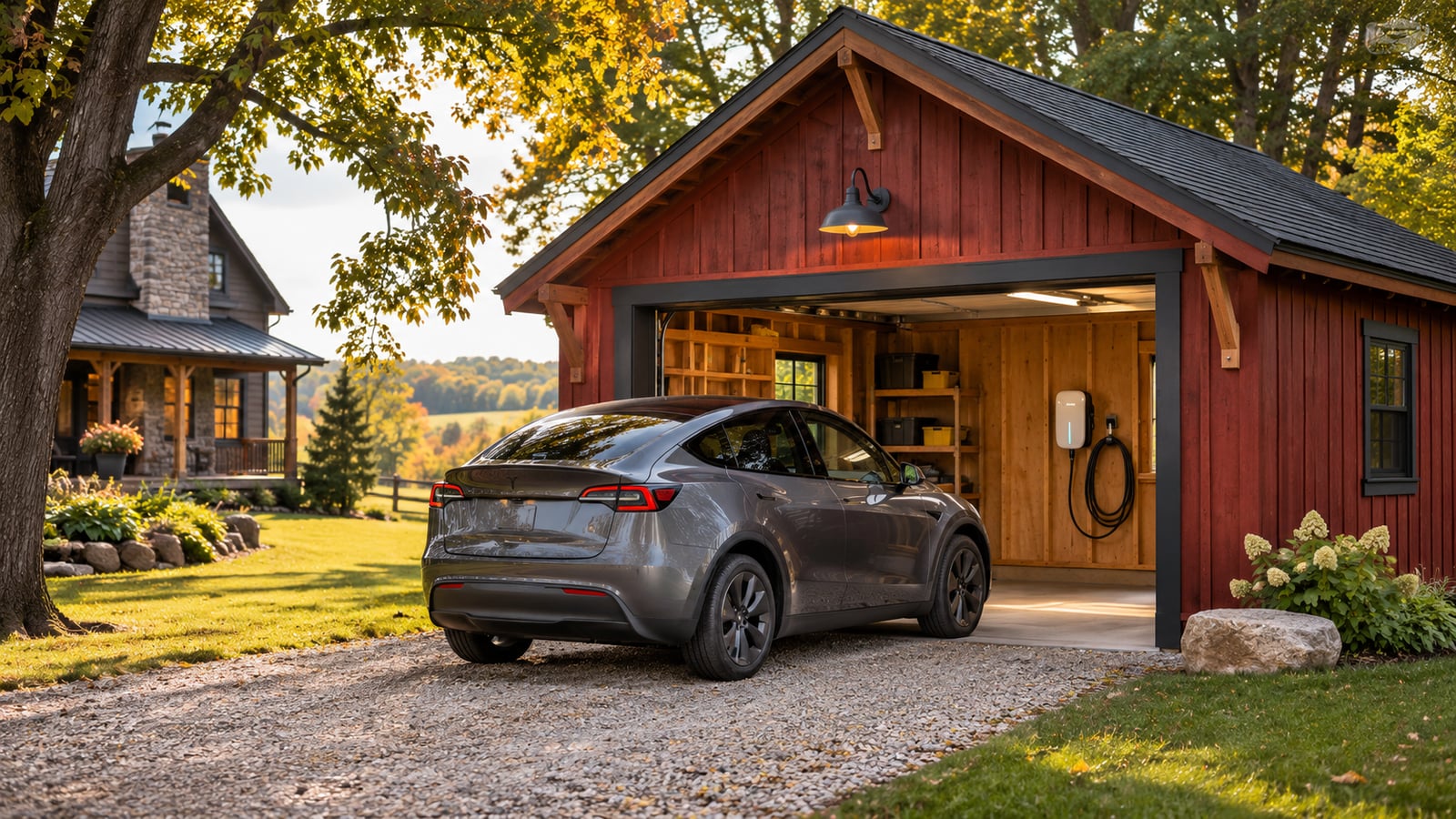
Quick answer
Installing an EV charger in a detached garage requires evaluating the garage's existing supply, the home's service capacity, the route to the parking space, and the intended charging rate. An existing garage subpanel does not automatically mean there is capacity for vehicle charging. Start with the complete supply path before selecting equipment.
Evaluate what already serves the garage
Provide any available records for the garage feeder and panel, plus a list of lighting, tools, heating, and other loads. The electrician may need to verify the installation and available capacity on site. Do not remove covers or expose buried wiring to help with the assessment.
A garage used only for parking can present different needs from one that also has electric heat and workshop equipment. If those uses may change, discuss them before the wiring route and charging arrangement are chosen.
Route planning can shape the project
Distance, building access, underground or overhead arrangements, and restoration can affect the scope. A straight-line measurement between house and garage is not necessarily the usable electrical route. Existing utilities and site conditions also need appropriate coordination.
Ask who handles any required excavation, utility locating, and surface restoration. Do not dig around an assumed route to save time before the contractor's plan is established.
A site-assessment checklist
- Vehicle model and typical parking position.
- Desired charging routine and available overnight hours.
- Existing garage electrical records and known equipment loads.
- Planned heating, tools, or second-vehicle charging.
- Site access, driveway use, snow storage, and network coverage if connected features are needed.
Avoid designing around maximum output
A long route or limited supply may make it useful to compare charging rates and management options. The goal is to meet actual driving needs with a suitable installation. A lower configured rate can be adequate for some routines, but the conclusion should follow the assessment.
If the charger relies on connected features, check how it behaves without network access. Do not assume house Wi-Fi reaches the detached building or that loss of internet necessarily stops every model from charging. Verify the proposed product's behavior.
Compare complete scopes
A proposal may involve using a verified existing supply, changing the garage feeder, adding distribution equipment, or upgrading other parts of the electrical system. Ask which problem each change solves. Keep charging equipment cost separate from significant site and electrical work so the comparison remains understandable.
Christopher Power Systems offers Level 2 EV charging and electrical planning. Share the garage layout and future use plans when requesting an assessment. Ask for a clear explanation of charging performance, installation work, and restoration responsibilities.
Long wiring routes and existing garage supply?
Every property is different. Get guidance specific to yours.
Frequently Asked Questions
Straight answers to what homeowners and businesses ask us most.
Possibly. Its feeder, existing loads, condition, and the upstream service must be evaluated together.
No. The route and existing installation determine the work. Do not assume a method before the site is reviewed.
Do not improvise an EV charging supply with an extension cord. Follow the equipment requirements and arrange a suitable permanent installation where needed.
Sun or storms, we have you covered
Get a free, no-pressure power assessment tailored to your property and priorities.