
Home Standby Generators
Permanently installed backup power that starts on its own the moment the grid goes down — and switches your home back automatically when it returns.
What is a home standby generator?
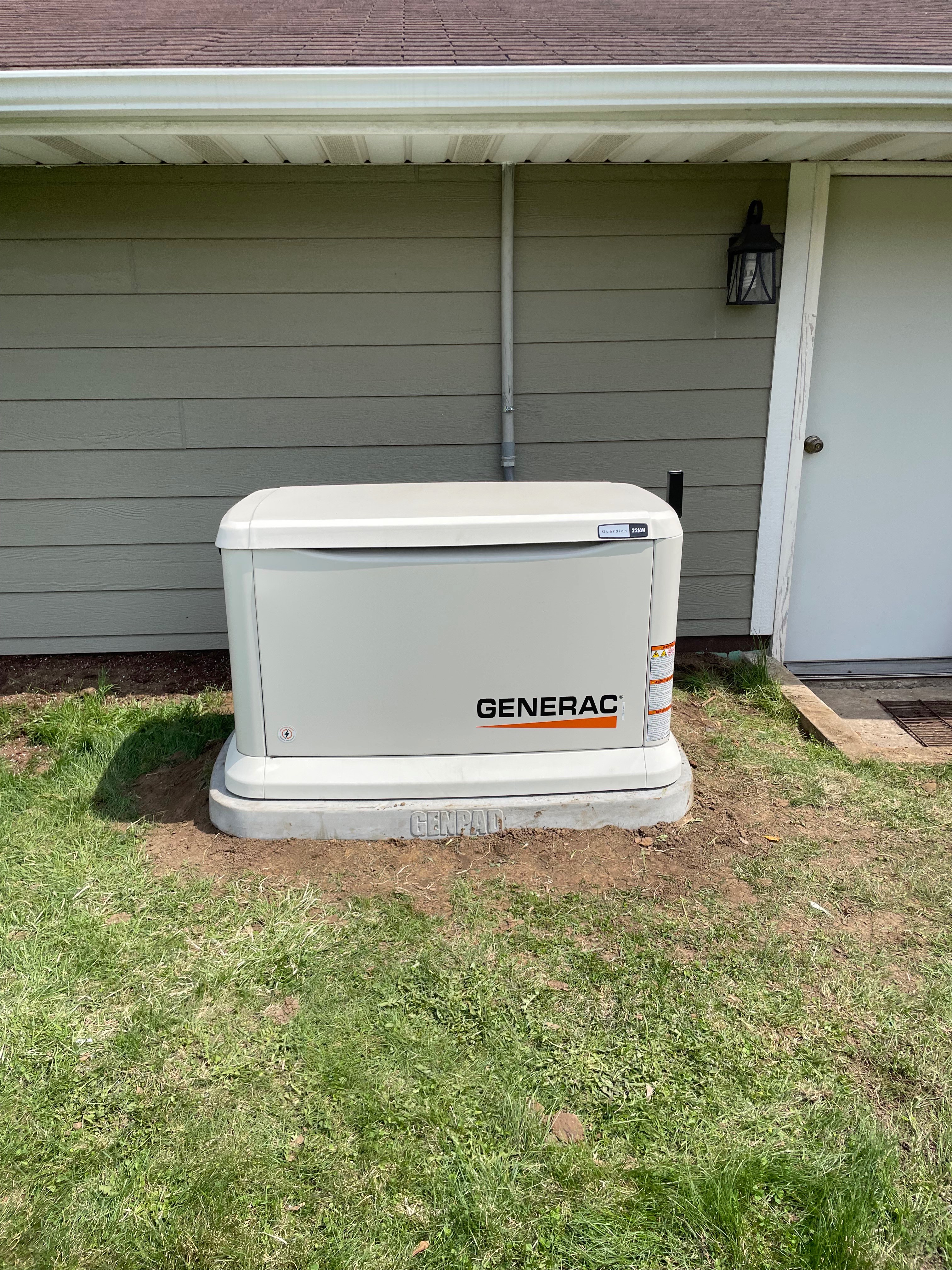
Backup Power That Works Without You
Unlike a portable generator, a home standby system is always in place and always ready. There are no cords to run, no fuel cans to fill, and no reason to head outside in a storm. The system does its job whether you're home, asleep, or away.
We plan each installation around the loads that matter most to your household, integrate it with your electrical panel and fuel supply, and keep it maintained so it starts the moment you need it.
What Makes a Standby System Different
Standby generators are engineered to take over automatically — the difference you notice most during a Northern Wisconsin winter.
Automatic Operation
The system monitors utility power and starts on its own within seconds of an outage — whether or not anyone is home.
Permanently Installed
A standby unit sits outside on a pad and is wired into your electrical system. There are no cords to run or portable units to move.
Runs on Propane or Natural Gas
Standby systems draw from an existing fuel supply, so they can run for extended outages without refueling by hand.
Automatic Transfer Switch
A transfer switch isolates your home from the grid before generator power flows, protecting your home and utility crews.
Self-Test Ready
Standby generators run a scheduled exercise cycle to keep the engine and battery ready between outages.
Built for Winter Outages
In Northern Wisconsin, the outages that matter most often arrive with ice and cold — exactly when automatic backup earns its keep.
How Power Flows Through a Standby System
Every standby installation ties four parts together so the transition between grid and generator power happens safely and automatically.
Utility Power
Grid power feeds the property day to day.
Standby Generator
Detects the outage and starts automatically.
Transfer Switch
Safely switches the home to generator power.
Your Circuits
Selected or whole-home loads stay powered.
Keep the Essentials Running
A standby system can be sized to back up specific essentials or your entire home. These are the loads homeowners most often prioritize.
Heating systems
Furnace blowers and boiler controls that keep the house from freezing.
Well pumps
Water for drinking, bathrooms, and everyday use on rural properties.
Refrigeration
Refrigerators and freezers so food doesn't spoil during a long outage.
Sump pumps
Keeping basements dry when storms knock out power.
Lighting & outlets
Essential circuits so daily life continues safely.
Medical equipment
Powering devices that a household depends on day to day.
Home Standby vs. Portable Generators
Both provide backup power, but they solve very different problems. Here's how they compare.
| Home Standby Generator | Portable Generator | |
|---|---|---|
| Starts during an outage | Automatically | Manually, by hand |
| Installation | Permanent, wired in | None — moved as needed |
| Powers essential circuits | Yes, through your panel | Limited, via cords |
| Fuel | Propane or natural gas supply | Gasoline, refilled by hand |
| Operating in winter weather | Runs unattended outdoors | Requires going outside to run |
| Transfer switch | Automatic | Manual interlock or none |
- Home Standby Generator
- Automatically
- Portable Generator
- Manually, by hand
- Home Standby Generator
- Permanent, wired in
- Portable Generator
- None — moved as needed
- Home Standby Generator
- Yes, through your panel
- Portable Generator
- Limited, via cords
- Home Standby Generator
- Propane or natural gas supply
- Portable Generator
- Gasoline, refilled by hand
- Home Standby Generator
- Runs unattended outdoors
- Portable Generator
- Requires going outside to run
- Home Standby Generator
- Automatic
- Portable Generator
- Manual interlock or none
Why It Matters in Northern Wisconsin
Backup power here has to account for hard winters, rural properties and long distances between neighbors. It shapes how we plan every system.
Winter storms and ice
Northern Wisconsin outages often coincide with the coldest, most dangerous weather. Automatic backup keeps heat and water running when a manual solution isn't practical.
Rural wells
Many area homes rely on a well pump for all their water. Without power, there's no water — which makes backup power about far more than convenience.
Longer outages
Rural grids can take longer to restore after major weather. A standby generator running on a fuel supply is built for outages measured in days, not minutes.
Real Jobs, Not Stock Photos
Actual Christopher Power Systems installations relevant to this service — photographed on real Northern Wisconsin properties.
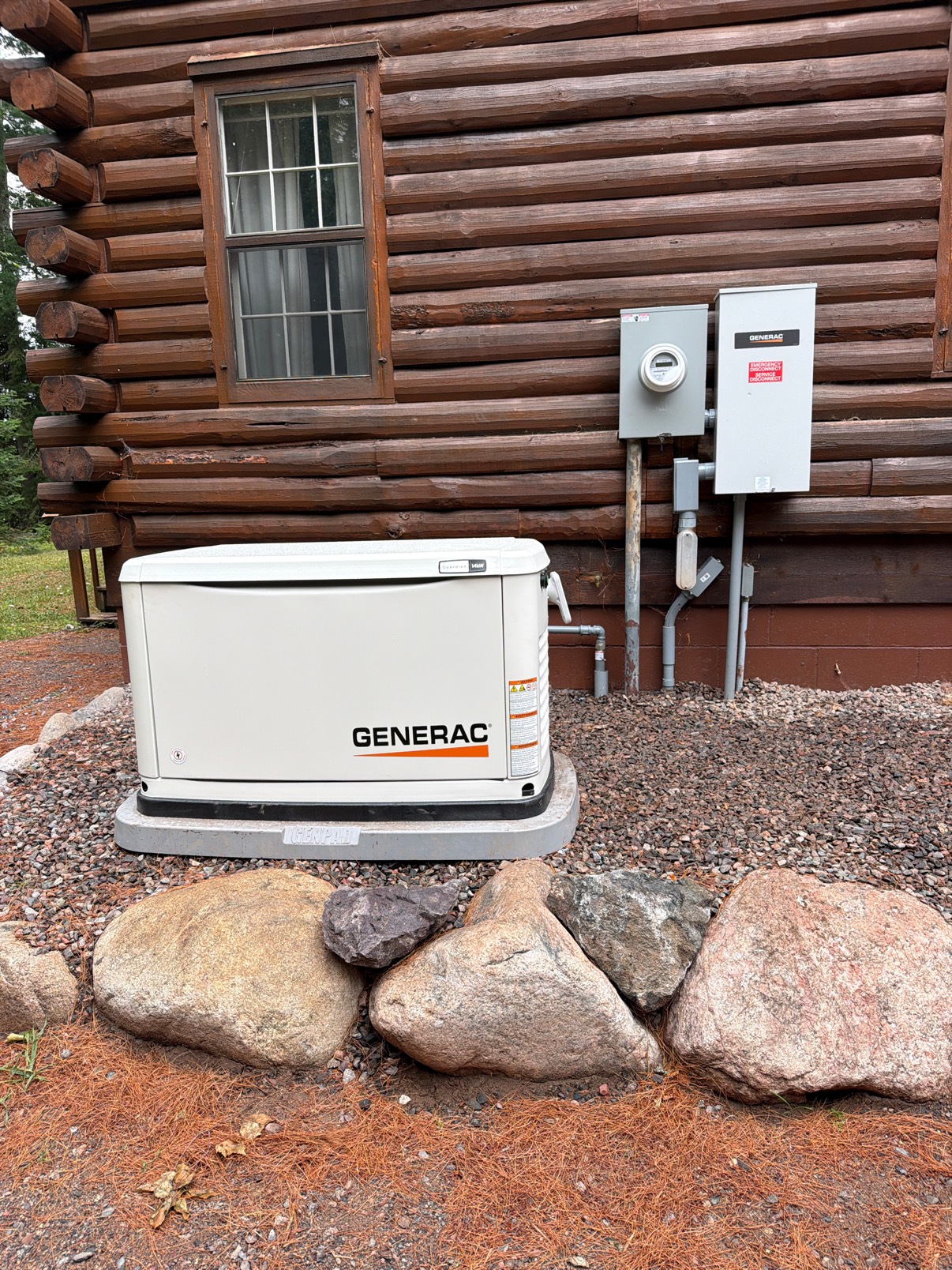
Whole-home standby generator and service disconnect installed at a Northern Wisconsin log cabin.
A completed whole-home Generac Guardian install, ready for automatic backup power.
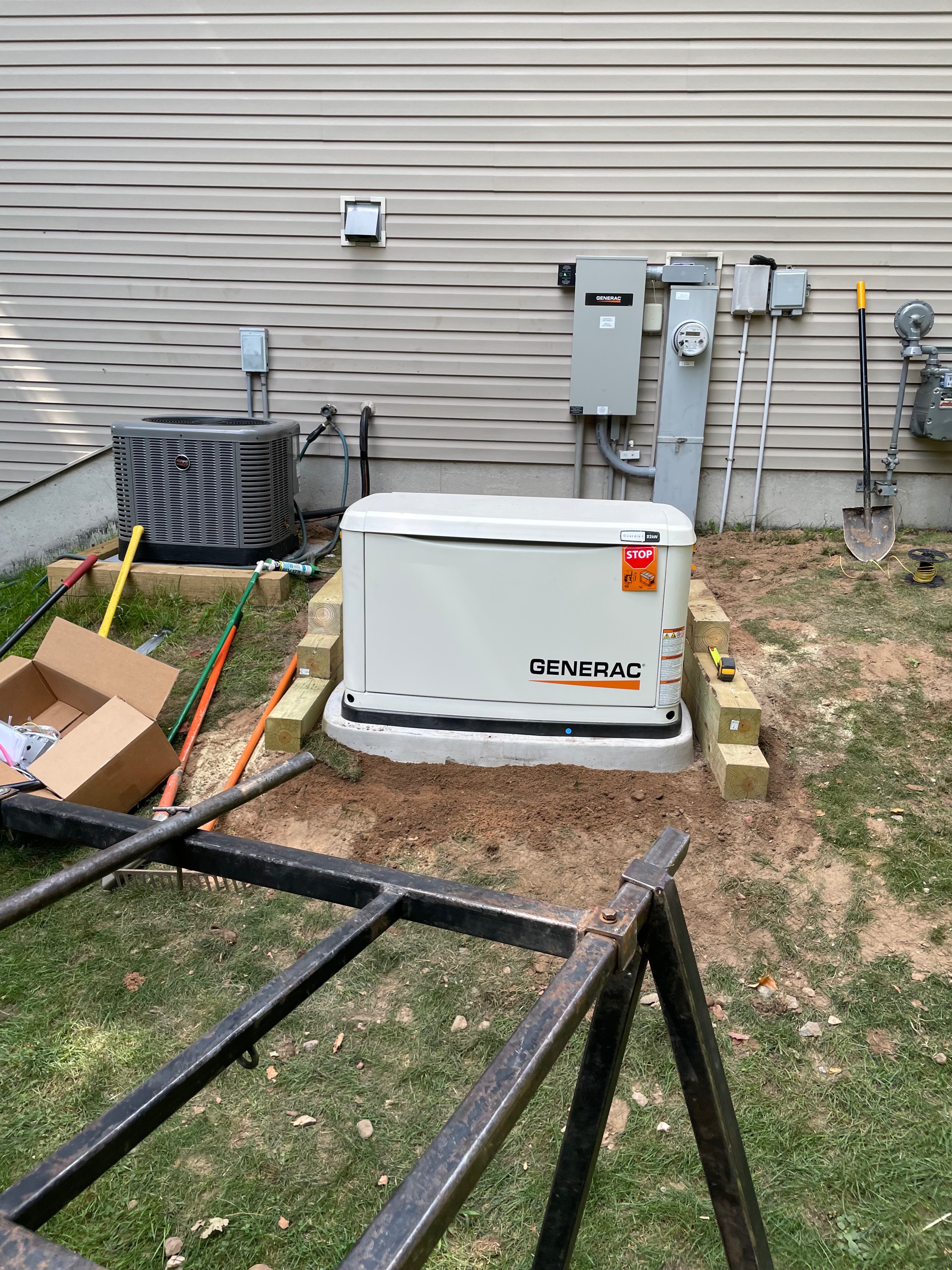
Mid-installation: generator set, transfer switch mounted, and gas and electrical being tied in.
See more real installations from across Northern Wisconsin.
View Our WorkFrequently Asked Questions
Straight answers to what homeowners and businesses ask us most.
The system continuously monitors utility power through the transfer switch. When it detects an outage, it signals the generator to start, and the transfer switch moves the home to generator power — usually within seconds. When the utility returns, it switches back and shuts the generator down.
It can, if the system is sized for it. Many homeowners choose to back up essential circuits — heat, water, refrigeration, and key outlets — while others cover the entire home. The right choice depends on your loads and priorities, which we review during a power assessment.
Because it draws from a propane or natural gas supply rather than a portable fuel tank, a standby generator can run for extended outages. Runtime depends on fuel supply and load, and the generator runs periodic self-tests to stay ready between outages.
Standby generators run an engine, so they do produce sound while operating, and briefly during their scheduled exercise cycle. Placement and local requirements are part of planning an installation.
Keep exploring
Backup power and electrical work connect. Here's what most often pairs with this service.
Generator Sizing
How standby generators are sized around real electrical loads — not square footage.
Generator Installation
Sizing, placement, electrical integration and transfer equipment installed as a complete system.
Automatic Transfer Switches
The device that safely moves your home between utility and generator power.
Related guides
Straight answers to the questions we hear most about backup power.
See What a Standby System Would Take
Get a free power assessment. We'll walk your property, review your priorities, and recommend a system sized to what matters.