
Home Battery Backup vs. Standby Generator: Compare the Tradeoffs
A home battery and a standby generator solve outage needs in different ways.
Quick answer
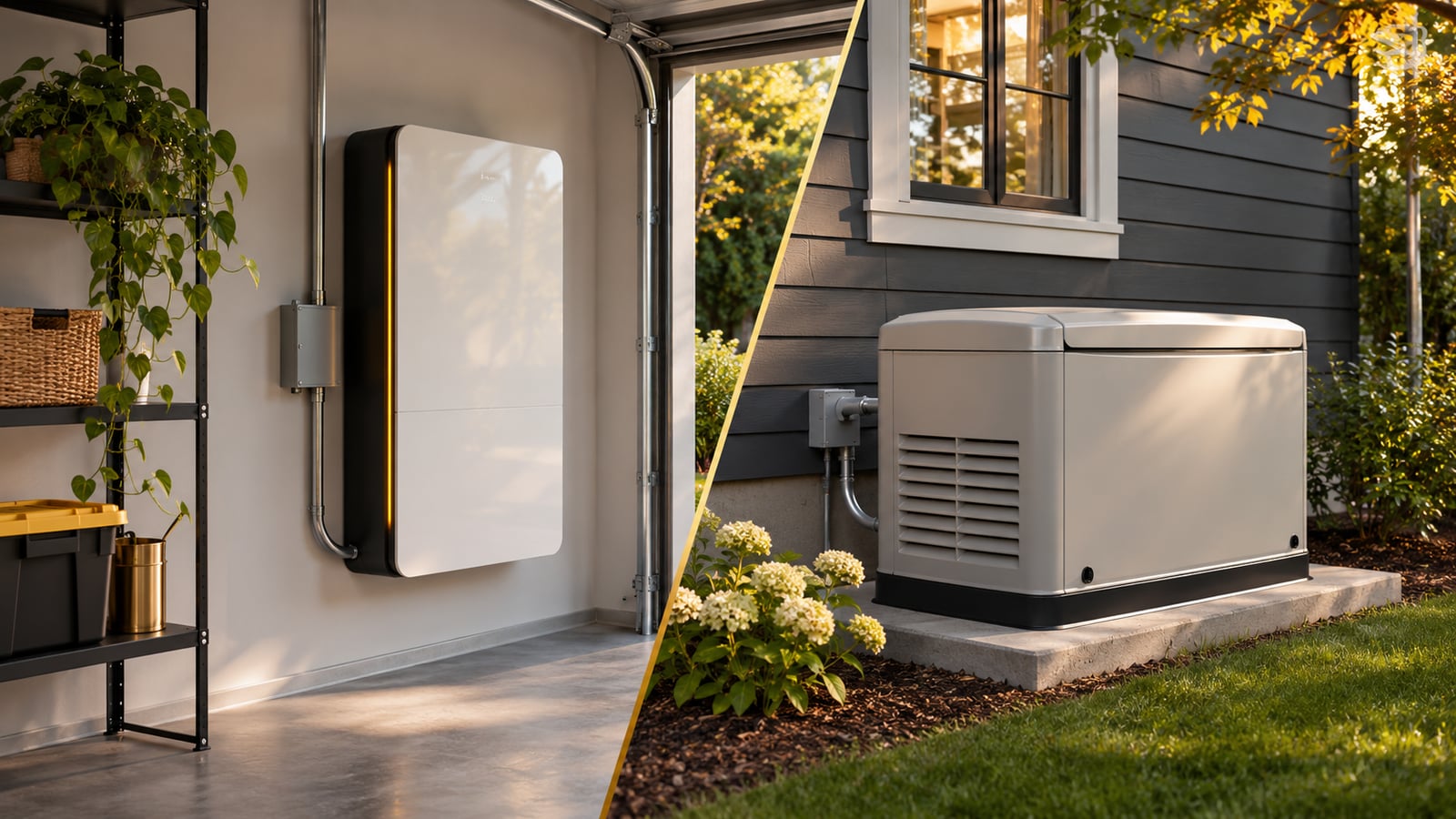
A home battery and a standby generator solve outage needs in different ways. A battery supplies stored energy with finite capacity; a generator produces electricity while it has suitable fuel and remains within operating and maintenance limits. Compare the desired loads, outage duration, site, noise considerations, and upkeep rather than declaring one universally better.
Compare the core tradeoffs
| Consideration | Home battery | Standby generator |
|---|---|---|
| Energy source | Stored electricity, with compatible recharge options depending on design. | Fuel supply appropriate to the equipment. |
| Longer outages | Depends on stored energy and available recharging. | Depends on fuel, condition, maintenance, and operating limits. |
| Equipment behavior | No combustion engine during discharge. | Engine operation introduces sound, exhaust, and service needs. |
| Load support | Limited by power and energy capability. | Limited by assessed capacity, starting loads, and fuel delivery. |
| Site design | Mounting, environment, controls, and electrical integration. | Placement, clearances, fuel routing, exhaust, and transfer equipment. |
Define the outage you are planning for
A short interruption with modest essentials differs from several days of winter heating and water demand. List the loads that matter and which can be reduced. A household focused on lights and refrigeration may reach a different decision from a property with large electric heating loads.
Neither system should be selected solely from a “whole-home” marketing label. Ask what that means in the proposed configuration and whether load management or selected circuits are involved.
Compare complete installed costs and responsibilities
For batteries, include required backup controls and electrical work. For generators, include fuel arrangements, transfer equipment, installation, and ongoing maintenance. Review actual warranty and service terms rather than assuming one technology has no future costs.
Operating cost and backup value are different questions. A battery's potential rate-management benefit depends on the utility arrangement, while generator fuel use depends on load and runtime. Do not use unverified savings or fuel assumptions to make the comparison appear certain.
Can they work together?
Some professionally designed systems can combine generation and storage, but compatibility is configuration-specific. A battery, solar inverter, and generator should not be connected together simply because each can provide power. Controls, operating modes, protection, and manufacturer support must be verified.
If a combined system is proposed, ask which component powers which loads, how charging works, and what happens when one part is unavailable. More equipment can add capability and complexity at the same time.
Choose from a clear requirements list
Christopher Power Systems offers generator and energy-storage services. Bring your outage priorities, fuel situation, existing solar equipment, and tolerance for managed loads. Ask for suitable options with their assumptions and limitations stated side by side.
Choosing an outage power strategy?
Every property is different. Get guidance specific to yours.
Frequently Asked Questions
Straight answers to what homeowners and businesses ask us most.
It avoids a combustion engine while supplying power, but equipment may still have operational sounds. Confirm the proposed product and location.
No. Fuel, maintenance, equipment condition, and operating limits still apply.
Not automatically. Check transfer behavior and whether a suitable UPS or other dedicated solution is required.
Sun or storms, we have you covered
Get a free, no-pressure power assessment tailored to your property and priorities.