
Adding a Battery to Existing Solar: Compatibility Questions
Adding battery storage to existing solar requires checking the installed inverters, controls, electrical arrangement, and supported battery configuration.
Quick answer
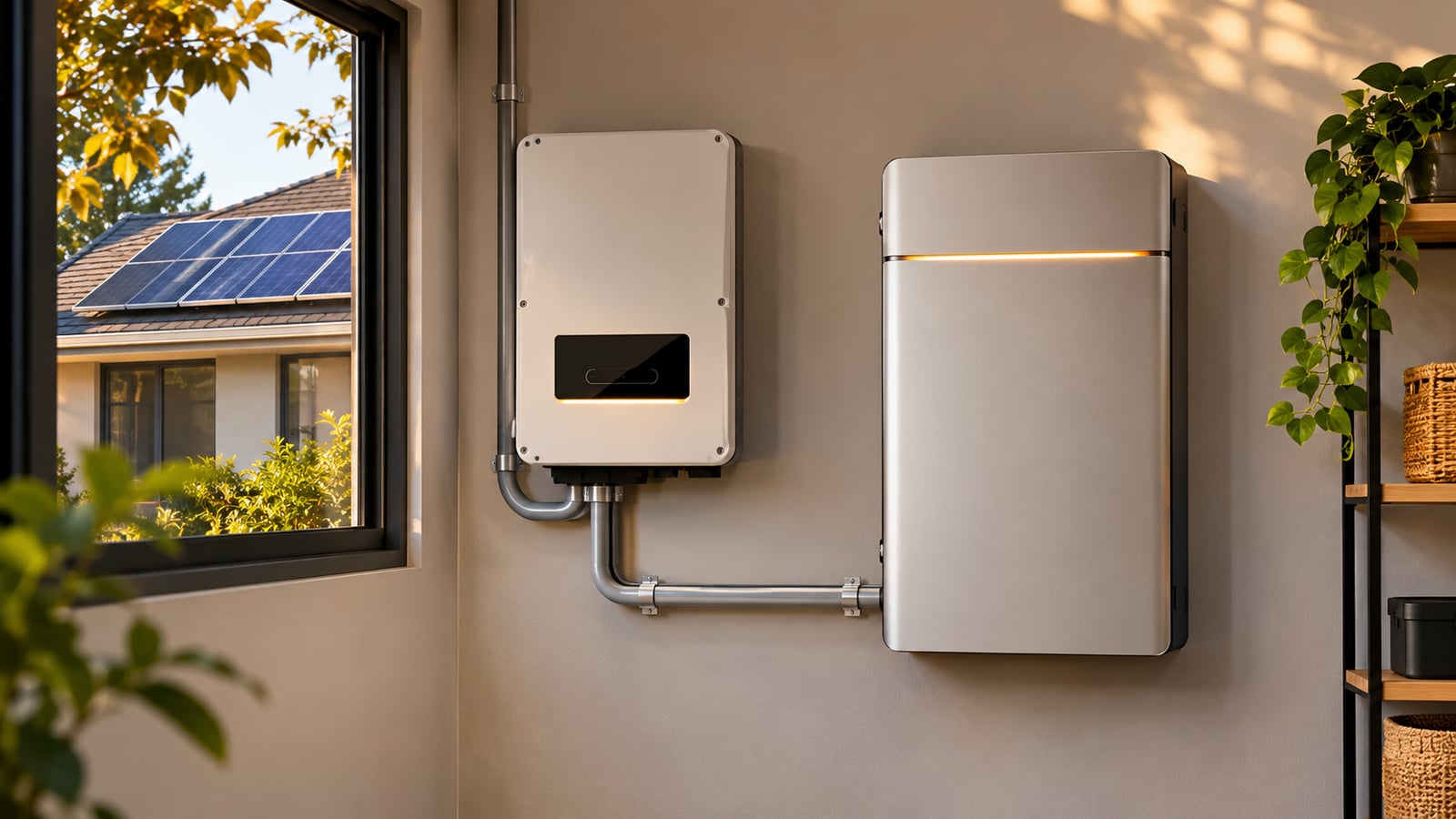
Adding battery storage to existing solar requires checking the installed inverters, controls, electrical arrangement, and supported battery configuration. It may be possible without replacing the rooftop panels, but that does not mean every battery is compatible or that backup comes automatically. Begin with the existing system documents and a clear storage goal.
Identify what you already have
Collect panel and inverter model information, system diagrams, commissioning records, utility approval, and monitoring access. Note any equipment changes or unresolved alerts. The provider needs to evaluate the actual installation rather than infer compatibility from the panel brand alone.
If records are incomplete, explain that early. An on-site assessment may be needed to establish the configuration and identify what additional information is required.
Define the reason for adding storage
Energy shifting, increased solar self-use, and outage backup are different objectives. A design can support more than one, but the controls and circuit arrangement must match the goal. Ask whether the proposal includes a functioning backup mode and which circuits it serves.
For an outage goal, provide the loads and duration priorities. Do not begin with a battery count and assume it will fit the household afterward.
Compatibility questions
- Is the battery supported with the existing inverter and control equipment?
- What additional controls or isolation equipment are required?
- Will solar recharge the battery during a utility outage in this configuration?
- Which equipment, if any, must be replaced or reconfigured?
- What utility application or approval changes are needed?
Manufacturers can expand supported configurations over time, so obtain current confirmation for the exact proposal rather than relying on an older general comparison.
Understand the integration scope
A retrofit may require panel work, circuit selection, new equipment locations, wiring routes, monitoring changes, or other associated work. Ask what is included and how responsibility is divided if the original installer and battery installer are different companies.
Review warranty implications using the actual terms. Do not assume a new component voids every existing warranty, and do not assume every warranty remains unaffected. Obtain a configuration-specific answer from the responsible parties.
Plan the handover
The owner should understand the battery's reserve behavior, backup circuits, monitoring, and response to depleted storage. Keep updated diagrams and equipment records with the original solar file. If two monitoring platforms remain in use, clarify what each one reports.
Christopher Power Systems offers Enphase storage and solar services. Share the existing system details when requesting an assessment, and ask for written confirmation of the supported arrangement and any limitations.
Retrofitting storage without assumptions?
Every property is different. Get guidance specific to yours.
Frequently Asked Questions
Straight answers to what homeowners and businesses ask us most.
Not necessarily. The complete electrical architecture and supported configuration determine the work.
No. Compatibility and approved operating modes must be verified.
Only if the complete system is designed and commissioned for that function. Storage alone is not enough to establish it.
Sun or storms, we have you covered
Get a free, no-pressure power assessment tailored to your property and priorities.