Whole-Home Generator Systems
Backup power sized to carry your entire home — so an outage doesn't mean choosing which parts of your life stay on.
What is a whole-home generator?
No Compromises During an Outage
Essential-circuit backup keeps the must-haves running. A whole-home system goes further — it's sized so you don't have to think about which appliances can run at the same time. The house simply keeps working.
That level of coverage depends on getting the sizing right. We calculate your home's real electrical loads, factor in heavy starting loads, and plan the panel and fuel supply so the system carries everything it needs to.
What Full Coverage Gives You
Whole-home backup is about removing compromises — and that starts with sizing the system to your actual home.
Whole-Home Coverage
Rather than choosing a handful of circuits, a whole-home system is sized to carry most or all of your home's electrical load.
No Load Shedding to Manage
When a system covers the full home, you don't have to think about which appliances can run at once during an outage.
Sized Around Real Loads
Whole-home coverage depends on accurate load calculation — including large motor and heating loads — not a rule of thumb.
Panel Integration
Backing up the whole home sometimes involves panel and transfer-switch planning so the system and electrical service work together.
Planning a Whole-Home System
Whole-home coverage is a sizing and integration exercise. These are the factors we work through for your property.
Total connected load
Whole-home coverage starts with adding up everything the home can draw at once.
Large motor loads
Well pumps, air conditioning, and shop equipment have high starting demands that shape sizing.
Electric heat
Homes with electric heat or heat pumps carry heavier loads that a whole-home system must account for.
Fuel supply
A larger system draws more fuel, so propane or natural gas capacity is part of the plan.
Electrical service
The generator ties into your panel and service, which may need review for a full-home system.
Future additions
Planned additions like an EV charger or shop can be considered up front.
Whole-Home vs. Essential-Circuit Backup
Both are valid approaches. The right one depends on your home and how you want to live during an outage.
| Whole-Home Coverage | Essential-Circuit Coverage | |
|---|---|---|
| What it powers | Most or all of the home | Selected essential circuits |
| Managing loads in an outage | Little to none | Some awareness of what runs at once |
| Typical system size | Larger | Smaller |
| Best for | All-electric homes, no compromises | Backing up the must-haves |
| Planning | Full load calculation | Prioritized circuit list |
- Whole-Home Coverage
- Most or all of the home
- Essential-Circuit Coverage
- Selected essential circuits
- Whole-Home Coverage
- Little to none
- Essential-Circuit Coverage
- Some awareness of what runs at once
- Whole-Home Coverage
- Larger
- Essential-Circuit Coverage
- Smaller
- Whole-Home Coverage
- All-electric homes, no compromises
- Essential-Circuit Coverage
- Backing up the must-haves
- Whole-Home Coverage
- Full load calculation
- Essential-Circuit Coverage
- Prioritized circuit list
Why It Matters in Northern Wisconsin
Backup power here has to account for hard winters, rural properties and long distances between neighbors. It shapes how we plan every system.
All-electric essentials
Many Northern Wisconsin homes depend on electricity for heat, water, and well pumps. Whole-home coverage means none of those are left off the list during a long winter outage.
Extended rural outages
When restoration takes days, a whole-home system on a fuel supply lets a household keep living normally instead of rationing power.
Larger rural properties
Homes with shops, outbuildings, or agricultural loads have needs that a whole-home approach can be planned around.
Real Jobs, Not Stock Photos
Actual Christopher Power Systems installations relevant to this service — photographed on real Northern Wisconsin properties.
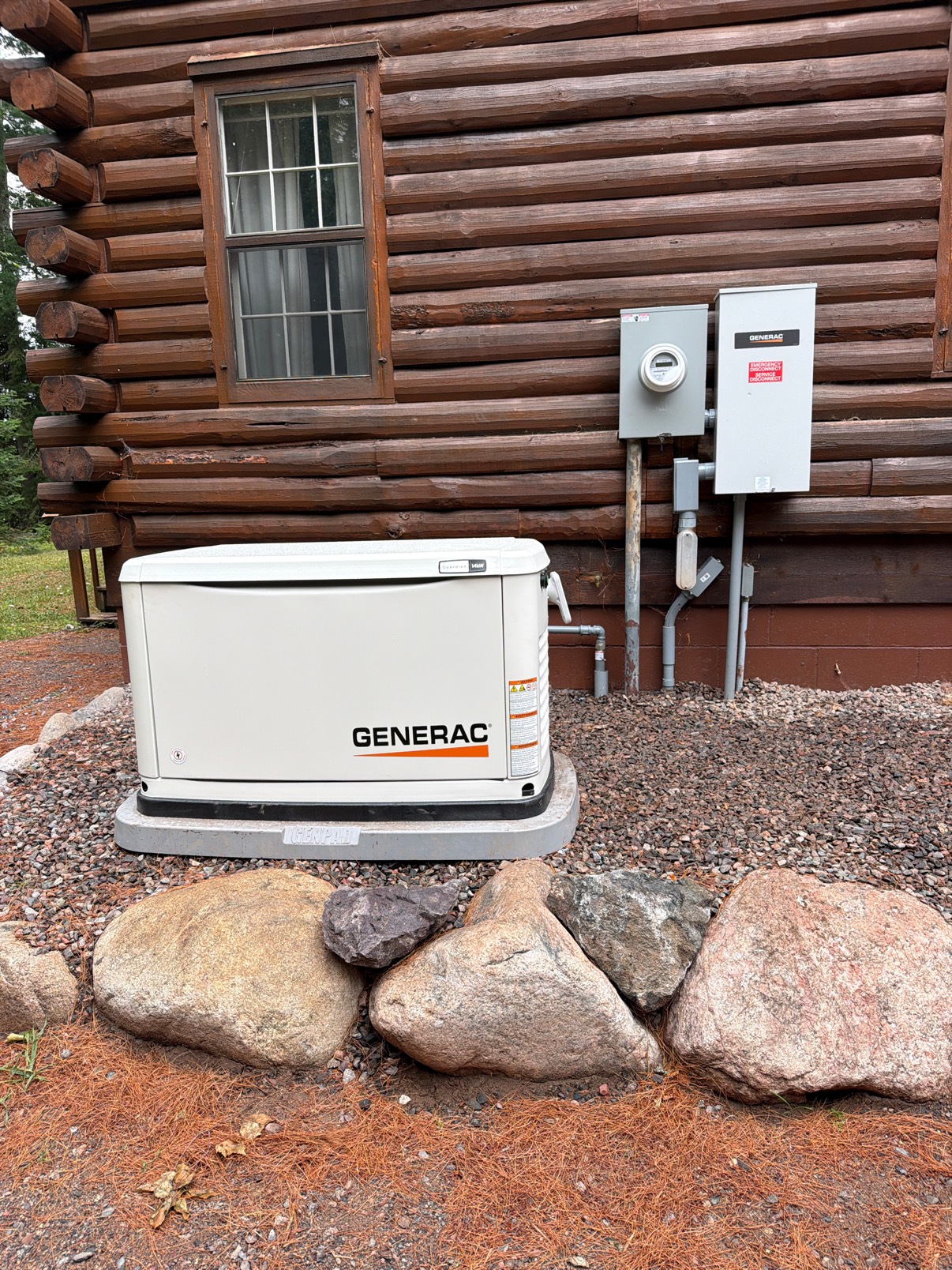
Whole-home standby generator and service disconnect installed at a Northern Wisconsin log cabin.
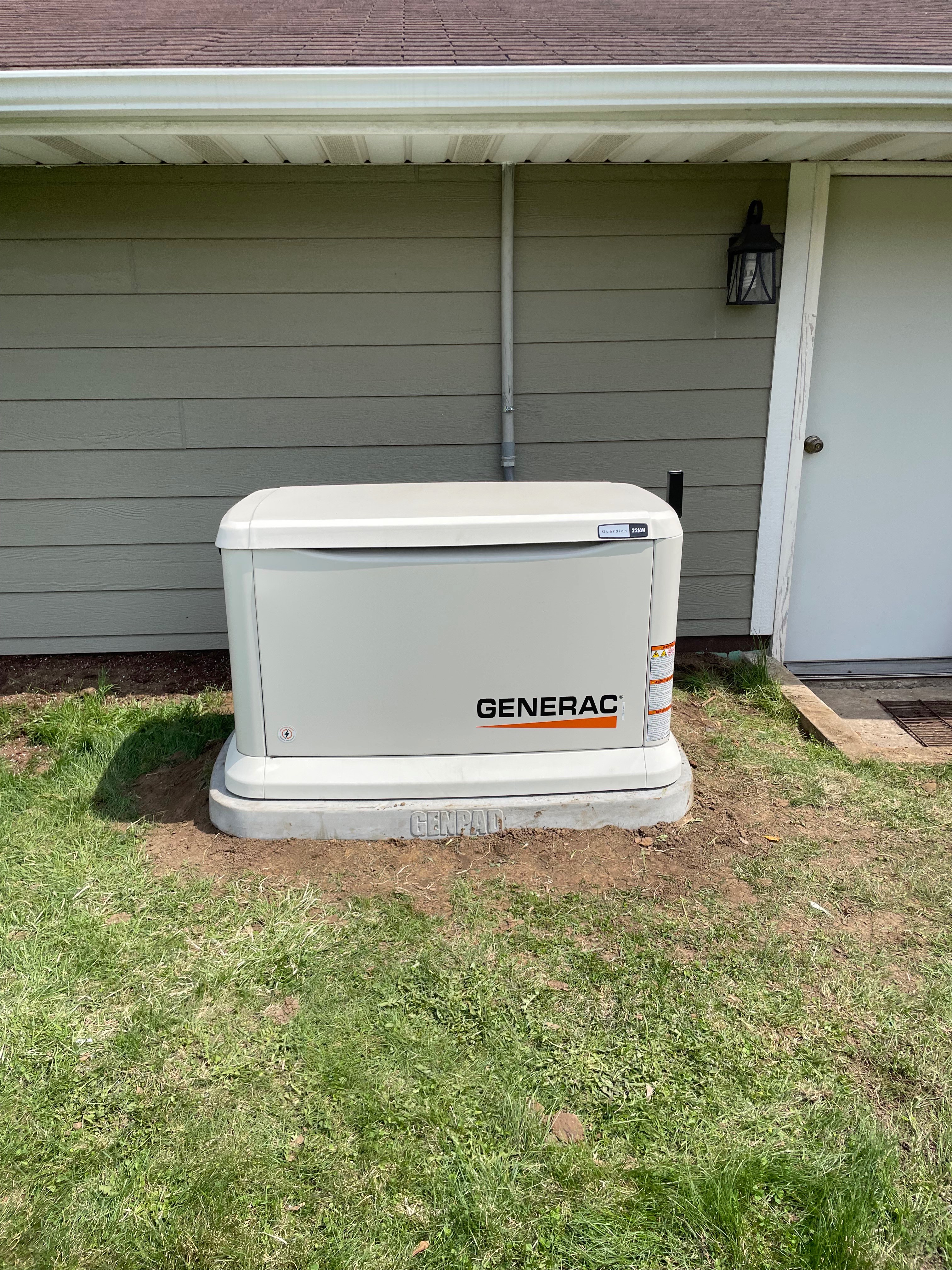
A completed whole-home Generac Guardian install, ready for automatic backup power.
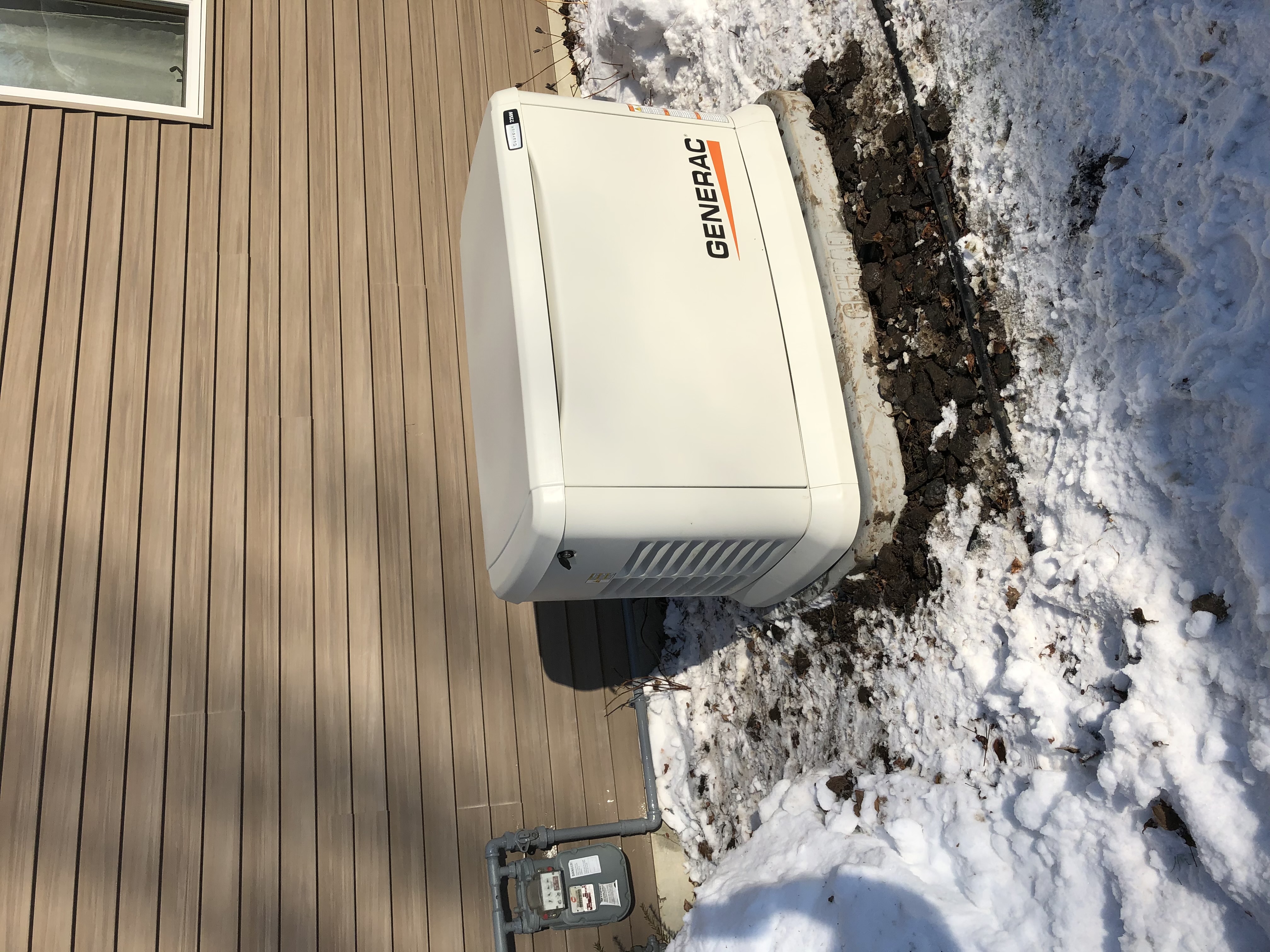
Standby power keeps running through Northern Wisconsin winters.
See more real installations from across Northern Wisconsin.
View Our WorkFrequently Asked Questions
Straight answers to what homeowners and businesses ask us most.
They're related. A standby generator is the type of system — permanently installed and automatic. 'Whole-home' describes how much of your home it's sized to power. A whole-home standby system is built and sized to carry most or all of your home's load rather than a few essential circuits.
By calculating your home's total electrical load, including large starting loads like well pumps and air conditioning, and any electric heating. Sizing is based on those real loads — not square footage — which is why we assess the property directly.
Sometimes. Whole-home coverage ties closely to your panel and electrical service. Whether any panel or service work is needed depends on your existing setup, which we review as part of planning.
It depends on your home and priorities. All-electric homes and households that don't want to manage loads during an outage often prefer whole-home coverage. Homes with a few clear must-haves may be well served by essential-circuit backup. We help you weigh both.
Keep exploring
Backup power and electrical work connect. Here's what most often pairs with this service.
Generator Sizing
How standby generators are sized around real electrical loads — not square footage.
Generator Installation
Sizing, placement, electrical integration and transfer equipment installed as a complete system.
Automatic Transfer Switches
The device that safely moves your home between utility and generator power.
Related guides
Straight answers to the questions we hear most about backup power.
Find Out What Whole-Home Coverage Takes
Get a free power assessment. We'll calculate your home's loads and recommend a system that carries them all.