
Automatic Transfer Switches
The device that makes a standby generator automatic — and safe. Here's how a transfer switch works and why every standby system depends on one.
What is an automatic transfer switch?
What the Transfer Switch Does
Small device, critical role. The transfer switch is what turns a generator into automatic, safe backup power.
Isolates the Grid
The transfer switch disconnects your home from the utility before generator power flows — protecting your home and, critically, utility line workers.
Automatic Switching
It senses the outage, signals the generator to start, and moves the home to backup power without anyone lifting a finger.
Ties Into Your Panel
The switch integrates with your electrical panel to route backup power to the circuits the system is sized to cover.
Restores Safely
When the utility returns, it transfers the home back and shuts the generator down — in the correct, safe sequence.
How Power Flows Through a Standby System
Every standby installation ties four parts together so the transition between grid and generator power happens safely and automatically.
Utility Power
Grid power feeds the property day to day.
Standby Generator
Detects the outage and starts automatically.
Transfer Switch
Safely switches the home to generator power.
Your Circuits
Selected or whole-home loads stay powered.
Automatic vs. Manual Transfer Switches
Both connect a generator to a building, but only one does it without someone present.
| Automatic Transfer Switch | Manual Transfer Switch | |
|---|---|---|
| Switching | Automatic, on its own | By hand, on site |
| Needs someone present | No | Yes |
| Works while you're away | Yes | No |
| Pairs with | Standby generators | Often portable generators |
| Grid isolation | Automatic and enforced | Manual |
- Automatic Transfer Switch
- Automatic, on its own
- Manual Transfer Switch
- By hand, on site
- Automatic Transfer Switch
- No
- Manual Transfer Switch
- Yes
- Automatic Transfer Switch
- Yes
- Manual Transfer Switch
- No
- Automatic Transfer Switch
- Standby generators
- Manual Transfer Switch
- Often portable generators
- Automatic Transfer Switch
- Automatic and enforced
- Manual Transfer Switch
- Manual
Why It Matters Here
Backup power here has to account for hard winters, rural properties and long distances between neighbors. It shapes how we plan every system.
Safety comes first
A transfer switch prevents backfeed onto utility lines — a serious hazard to line crews working to restore power. It's not optional; it's the safe, code-driven way to connect backup power.
Automatic means unattended
For Northern Wisconsin outages that hit overnight or while you're away, an automatic transfer switch is what lets the system protect your home without you there.
Integrated correctly
As a licensed electrical contractor, we integrate the transfer switch with your panel properly — the part of a standby system where doing it right matters most.
Real Jobs, Not Stock Photos
Actual Christopher Power Systems installations relevant to this service — photographed on real Northern Wisconsin properties.
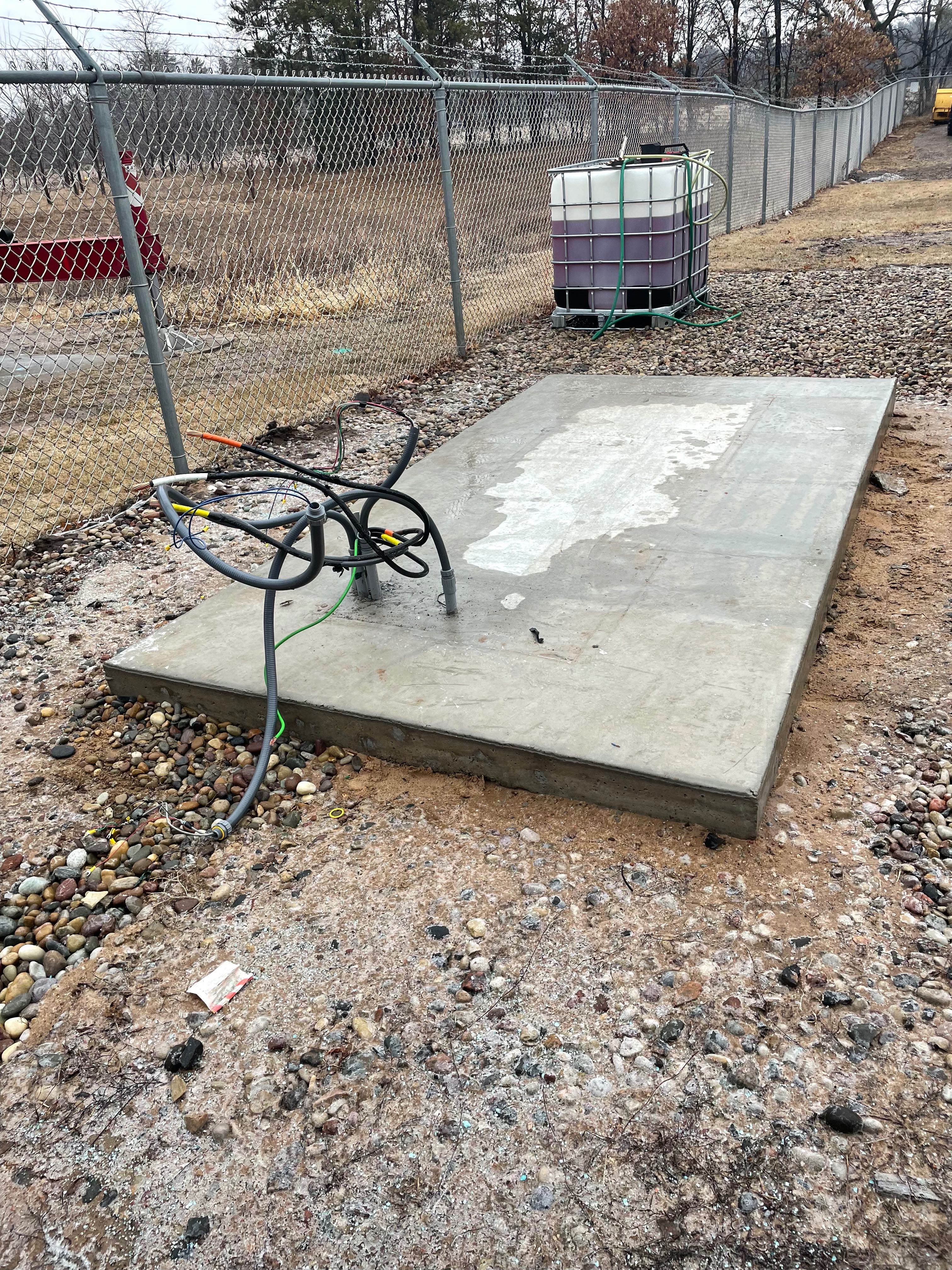
Concrete pad poured and electrical conduit roughed in, ready for the generator to be set.
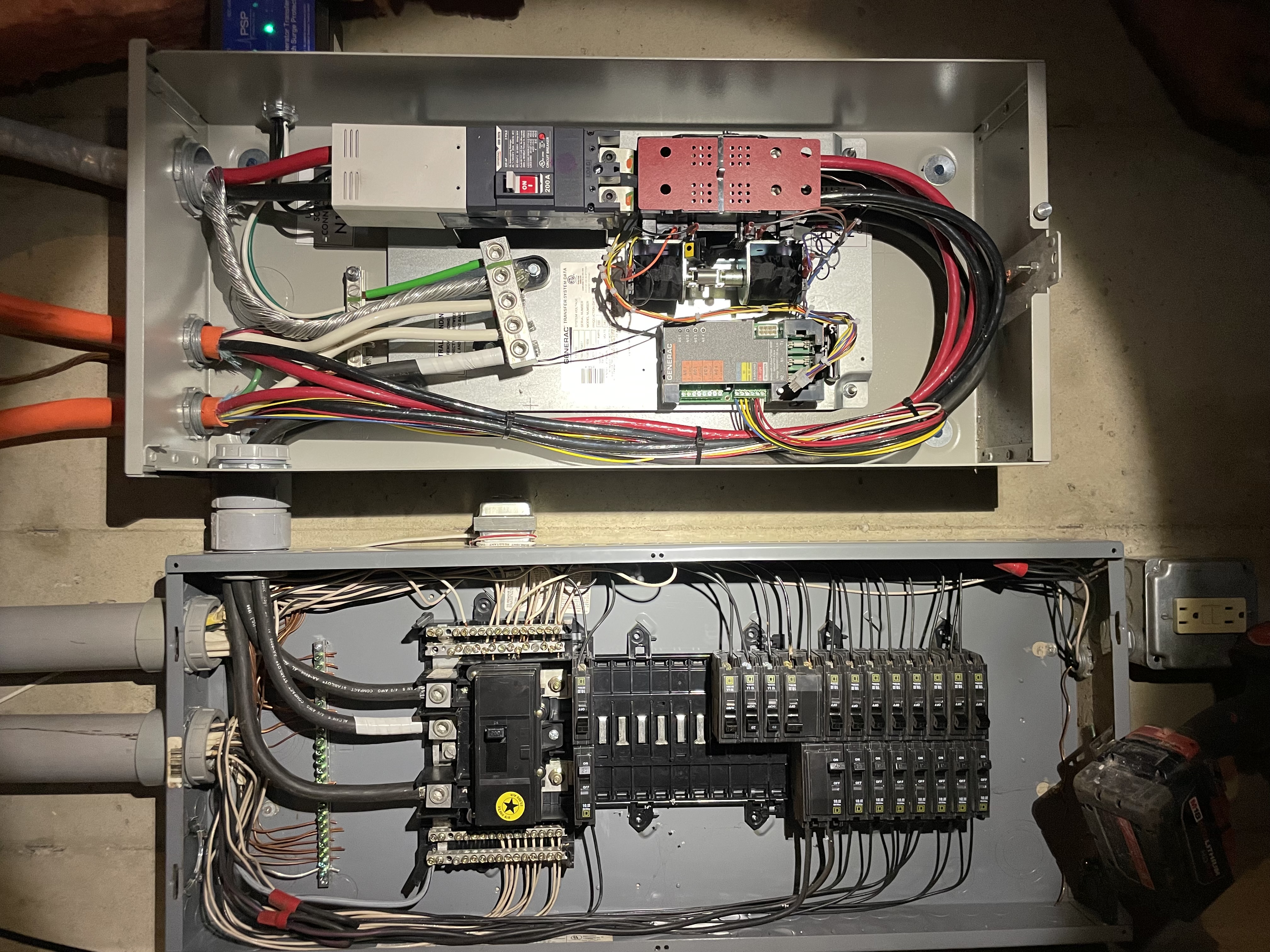
A Generac 200A automatic transfer switch wired in alongside the main panel.
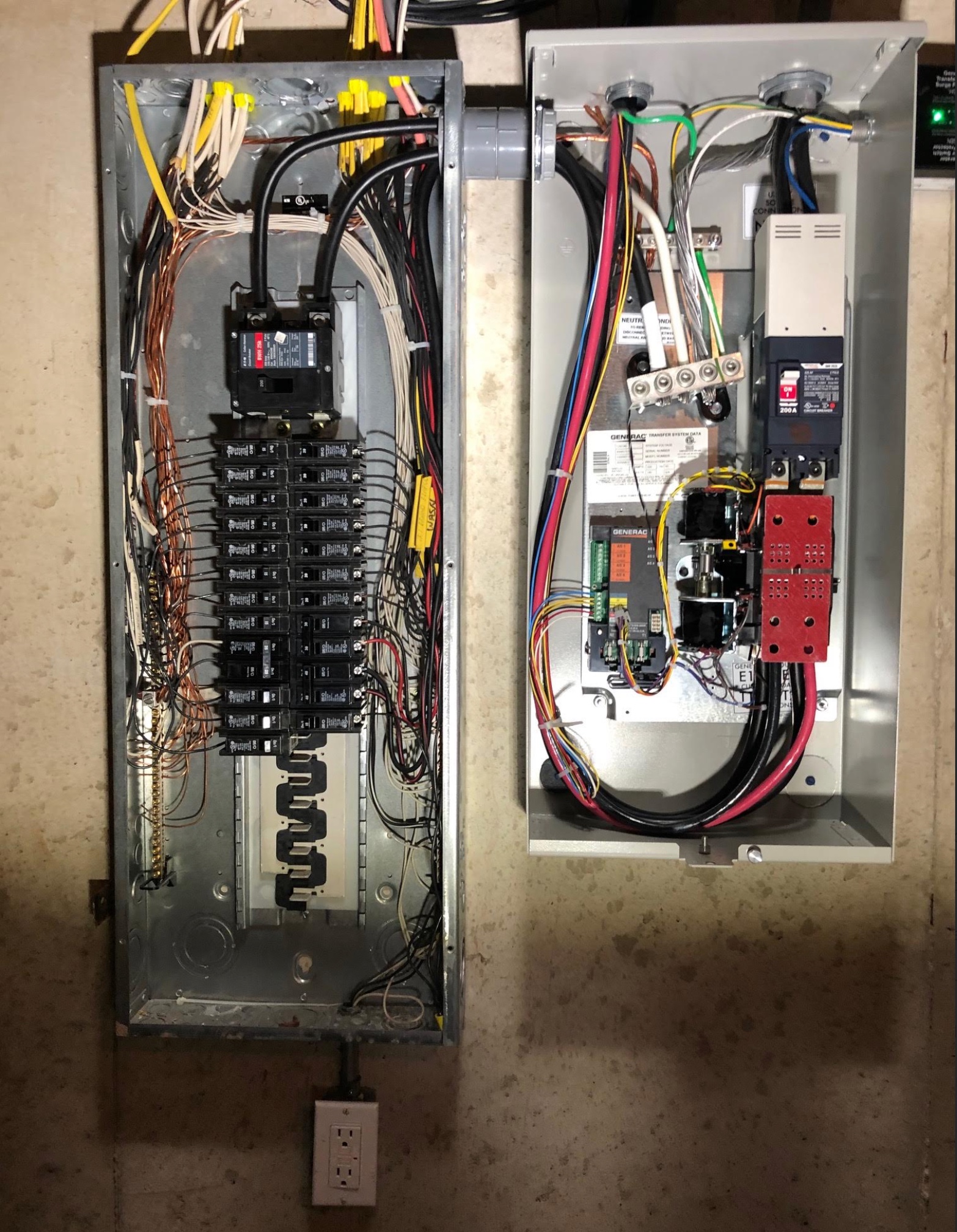
A main breaker panel and Generac automatic transfer switch wired in side by side.
See more real installations from across Northern Wisconsin.
View Our WorkReal Jobs, Not Stock Photos
Actual Christopher Power Systems installations relevant to this service — photographed on real Northern Wisconsin properties.
Concrete pad poured and electrical conduit roughed in, ready for the generator to be set.
A Generac 200A automatic transfer switch wired in alongside the main panel.
A main breaker panel and Generac automatic transfer switch wired in side by side.
See more real installations from across Northern Wisconsin.
View Our WorkFrequently Asked Questions
Straight answers to what homeowners and businesses ask us most.
An automatic transfer switch (ATS) is the device that connects your standby generator to your home safely and automatically. It senses a utility outage, disconnects the home from the grid, signals the generator to start, and moves the home onto backup power — then reverses the process when the utility returns. It's what makes standby power automatic.
It's both a safety and functionality requirement. The switch isolates your home from the utility so generator power can't backfeed onto the grid — a serious danger to utility workers — and it's what allows the generator to power your home's circuits correctly. A standby installation isn't complete or safe without one.
An automatic transfer switch operates on its own the moment an outage occurs, with no one present. A manual transfer switch has to be operated by hand on site, which is why it's more common with portable generators. Standby systems use automatic transfer switches so they work whether or not you're home.
Yes. Installing and integrating transfer switches is part of our standby generator and electrical work. We can include one with a new installation or address an existing switch that isn't operating correctly.
Keep exploring
Backup power and electrical work connect. Here's what most often pairs with this service.
Generator Installation
Sizing, placement, electrical integration and transfer equipment installed as a complete system.
Generator Sizing
How standby generators are sized around real electrical loads — not square footage.
Whole-Home Generators
Systems designed to carry most or all of a home's electrical load during an outage.
Related guides
Straight answers to the questions we hear most about backup power.
Make Your Backup Power Automatic
Whether it's a new system or an existing switch that isn't working right, we'll make sure yours transfers safely and automatically.