Electrical Panels & Load Centers
What a panel does, why its capacity matters, and how it ties into the backup power that keeps your property running through an outage.
What does an electrical panel do, and when does it need work?
Your electrical panel distributes incoming power into circuits and protects each one with a breaker. It also sets the ceiling on how much load your property can carry. A panel needs attention when it's full, aging, tripping frequently, showing signs of overheating, or when you're adding major loads like a standby generator — which connects to your system through the panel.
Everything Runs Through The Panel
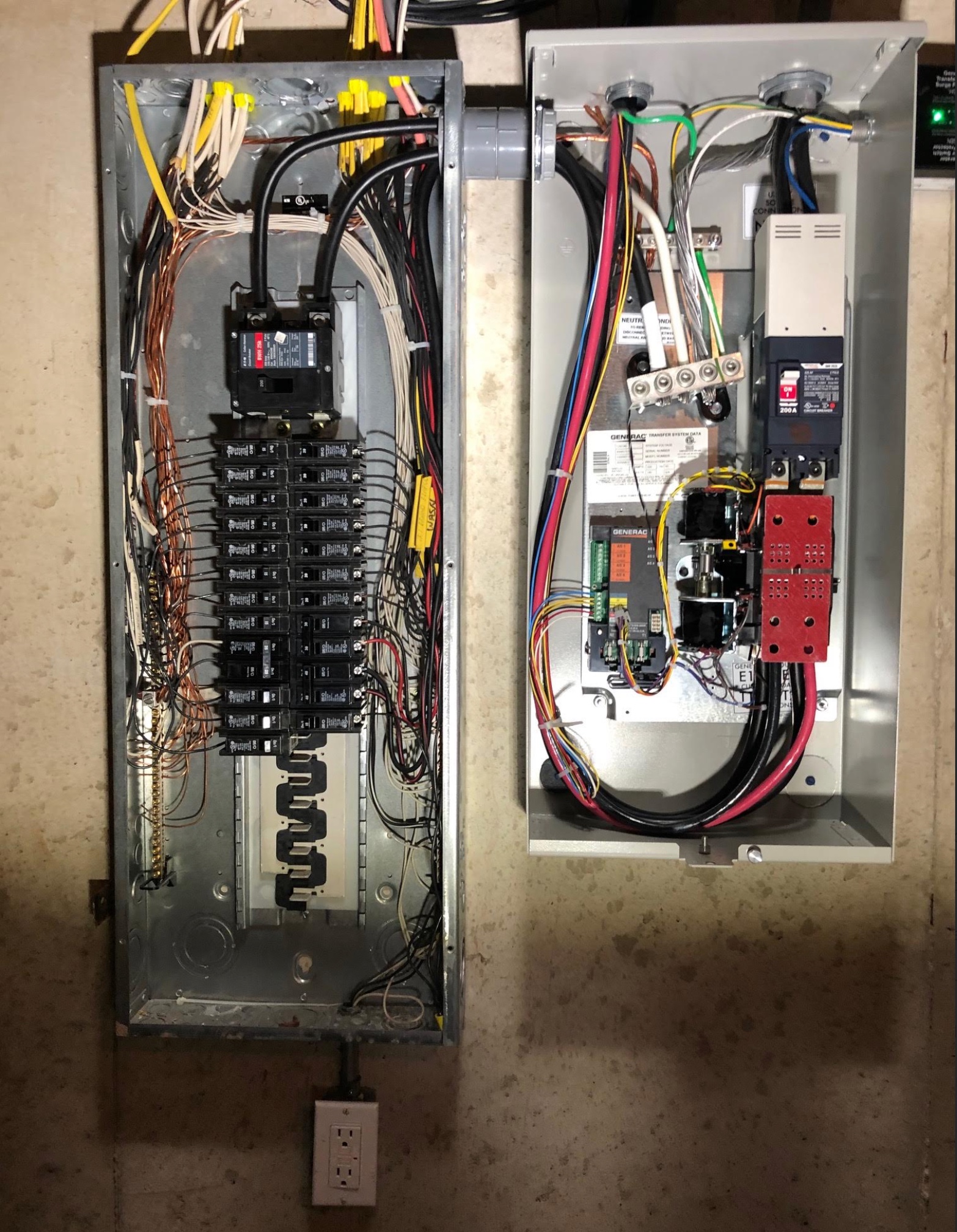
The panel is where your electrical system comes together. Incoming service enters, gets divided into circuits, and each circuit gets its own breaker for protection. It's the single point that determines how much power your property can safely handle.
That's why the panel matters so much for backup power. A standby generator integrates through the panel, so its condition and capacity directly affect which circuits stay alive during an outage — and whether the integration is clean and code-compliant.
Four Jobs Of Your Load Center
Distributes Power
The panel takes incoming service and splits it into the circuits that feed every part of your property.
Protects Circuits
Breakers cut power when a circuit is overloaded or faults — the panel is a safety device, not just a junction point.
Sets Capacity
The panel and service rating define how much load a property can carry. Run out of capacity and nothing new can be added safely.
Anchors Backup Power
A standby generator ties into the panel through transfer equipment. A healthy, right-sized panel is what makes clean backup integration possible.
When A Panel Is Due For Attention
Some of these are safety concerns; others are capacity limits. Either way, they're worth an evaluation.
The panel is full — no open slots for new breakers
Breakers trip regularly, or feel warm to the touch
A fuse box, or a brand of panel known to be problematic
Scorch marks, buzzing, or a burning smell at the panel
The panel hasn't been evaluated in decades
You're planning a generator, EV charger or major appliance
Frequently Asked Questions
Straight answers to what homeowners and businesses ask us most.
The panel (or load center) is the box that distributes and protects your circuits. The service is the capacity coming into the property from the utility. Sometimes only the panel needs replacing; sometimes the service itself needs to be increased. A load evaluation tells us which — and often the two are done together.
A standby generator connects to your electrical system through transfer equipment tied into the panel. The panel's condition and capacity determine which circuits the generator can protect and how cleanly the system integrates, so panel work is frequently part of a generator project.
It can be. A full panel means there's no room to add circuits safely, which blocks upgrades like a generator or EV charger and sometimes leads to unsafe workarounds. If you're planning to add load, a full panel is usually the first thing to address.
Yes. Panel work is performed to code with safety as the priority, so the system operates reliably and passes inspection.
Keep exploring
Backup power and electrical work connect. Here's what most often pairs with this service.
Service Upgrades
Increasing electrical service capacity for growing homes, businesses and backup systems.
Residential Electrical
Panel work, service improvements and the wiring behind home backup power.
Generator Installation
Sizing, placement, electrical integration and transfer equipment installed as a complete system.
Questions About Your Panel?
Get a free power assessment and we'll evaluate your panel's condition, capacity and backup-power readiness.