
Subpanel or Service Upgrade: Which Problem Are You Solving?
A subpanel adds a distribution point and potentially more circuit spaces; a service upgrade changes the capacity of the electrical supply arrangement.
Quick answer
A subpanel adds a distribution point and potentially more circuit spaces; a service upgrade changes the capacity of the electrical supply arrangement. They solve different problems. Before choosing either, determine whether your project needs more circuit space, a better distribution location, more available capacity, or a combination.
Think in three separate questions
First, where does power need to go? A detached garage or addition may benefit from a local distribution point. Second, are there enough suitable circuit positions? Third, can the existing supply support the planned loads? Answering only the space question can leave a capacity problem unresolved.
A subpanel is supplied from upstream equipment. Its label does not mean that amount of additional power has been added to the home. The feeder, upstream protection, existing service, and load design all remain relevant.
Compare the roles
| Option | Main purpose | Does not automatically provide |
|---|---|---|
| Subpanel | Distribute circuits in another location or add suitable circuit space. | More utility service capacity. |
| Main panel replacement | Address panel condition, suitability, or space. | A larger complete service. |
| Service upgrade | Increase assessed supply capacity with the required associated work. | New wiring to every appliance. |
A detached-garage example
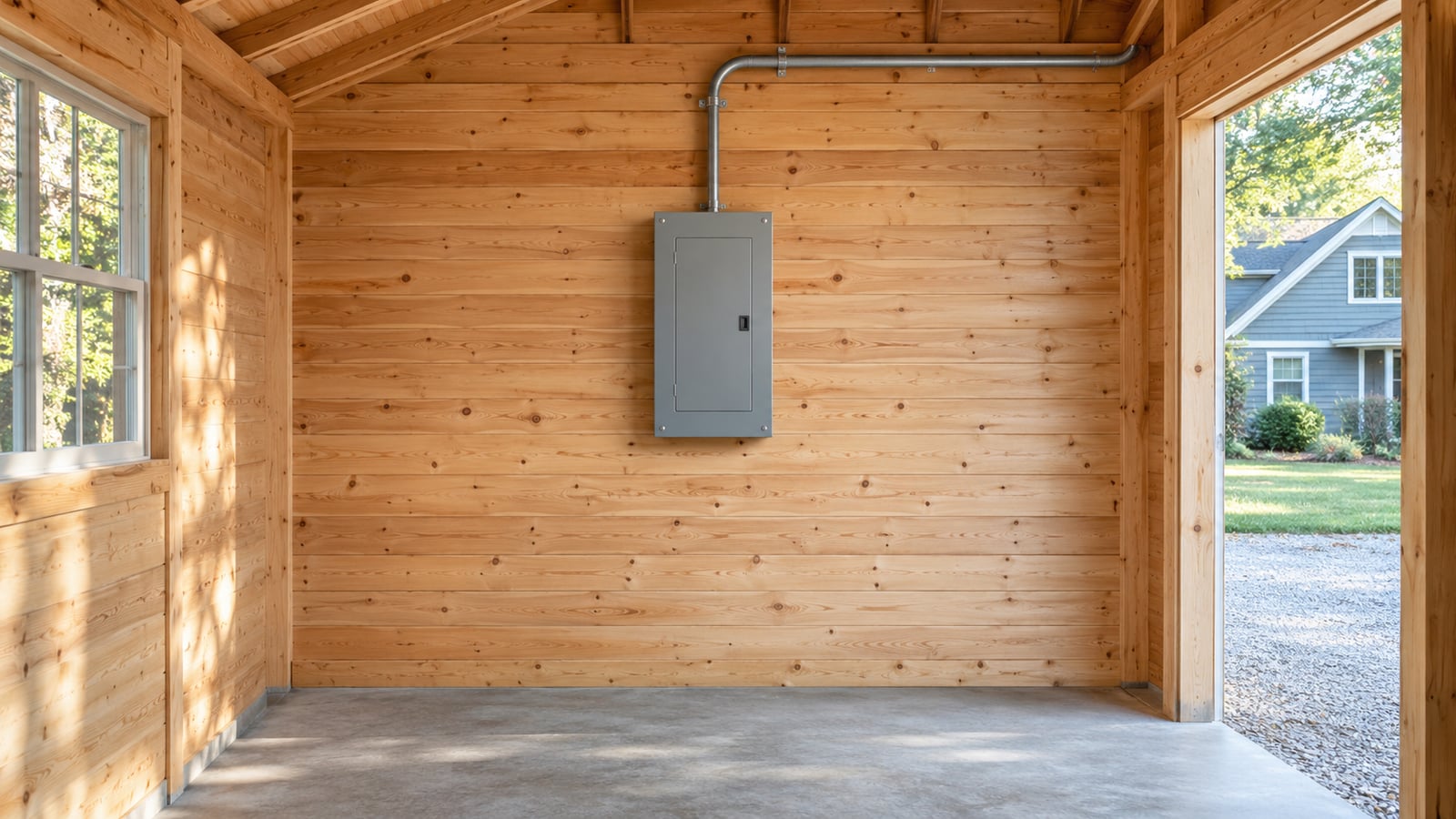
A homeowner wants lighting, tools, and an EV charger in a garage. Installing a subpanel might organize those circuits conveniently, but the designer still needs to assess the garage feeder and the home's service capacity. Adding a large panel enclosure without evaluating the supply does not solve the charging demand.
This is an illustrative project, not a wiring plan. Underground routes, building conditions, protective devices, and other requirements must be evaluated on site by qualified professionals.
Ask about future flexibility
If an addition or garage may later receive heating, another EV, or different equipment, say so during planning. Distinguish likely additions from speculative ones so the design can be compared sensibly. Ask what the proposed arrangement would support and what would require further work.
A coordinated project may avoid reopening finished areas later, but future-proofing is not unlimited. Equipment choices, site constraints, and future loads still need review when they become concrete.
Compare proposals by the problem solved
Ask each contractor to state whether the recommendation addresses condition, space, distribution, or capacity. Request the scope of feeder work, panel work, utility coordination, and restoration where applicable. That makes it easier to compare a subpanel proposal with a larger service project without assuming they are substitutes.
Christopher Power Systems provides electrical panel and service-upgrade work. Bring the intended equipment list and building layout, and request an assessment that separates those four needs.
Separating circuit space from service capacity?
Every property is different. Get guidance specific to yours.
Frequently Asked Questions
Straight answers to what homeowners and businesses ask us most.
Possibly, but suitability, capacity, and the complete installation need assessment. A full panel is only one part of the question.
The scopes differ. The right comparison is between options that actually meet the same project requirements.
It depends on the feeder, panel, load, and installation. Have the arrangement evaluated before purchasing equipment around that assumption.
Sun or storms, we have you covered
Get a free, no-pressure power assessment tailored to your property and priorities.