Microinverters vs. String Inverters: Questions for Your Installer
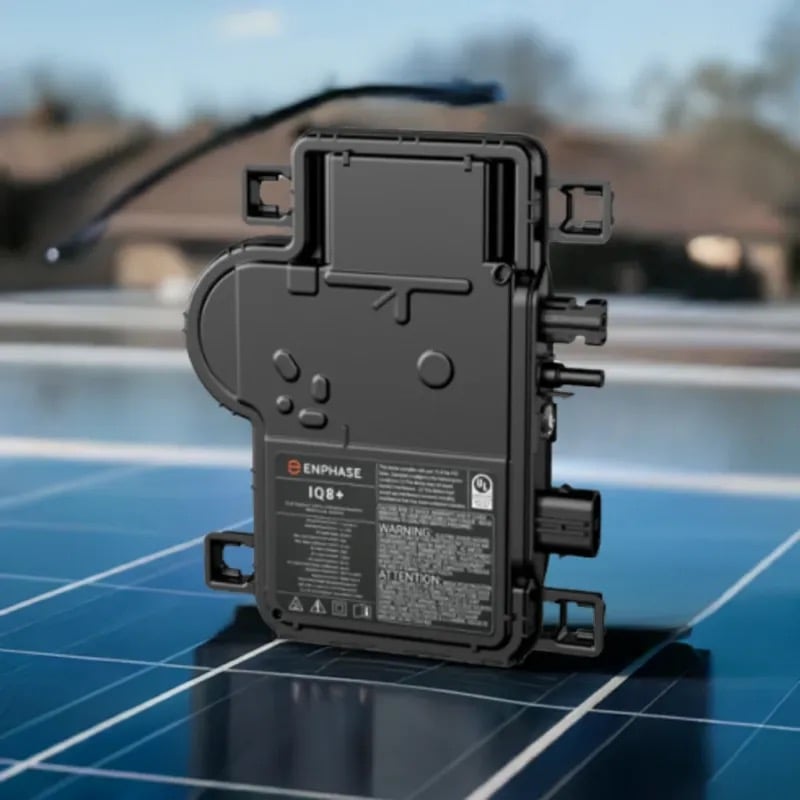
Microinverters convert power at individual panels, while a conventional string-inverter arrangement converts power from connected panel groups at a central inverter.
Quick answer
Microinverters convert power at individual panels, while a conventional string-inverter arrangement converts power from connected panel groups at a central inverter. Some systems also use panel-level optimizers. Compare the complete architecture, monitoring, service access, and site conditions rather than assuming one label guarantees better performance everywhere.
Understand the conversion location
Solar panels produce direct-current electricity. Inverters convert that output into alternating-current power for the designed electrical arrangement. With microinverters, conversion occurs at the module level. With a string inverter, connected modules feed a central conversion unit; additional electronics may change how the system manages individual panels.
Christopher Power Systems' solar offering is based on Enphase microinverter technology. That business offering is separate from a claim that every competing architecture is unsuitable. The right explanation should show how the proposed design fits the property.
Compare useful questions
| Topic | What to ask |
|---|---|
| Shading and roof layout | How does the complete proposed system respond to different panel conditions? |
| Monitoring | What system-level or panel-level information is available to the owner? |
| Service access | Where are components located and how would a fault be serviced? |
| Expansion | What compatibility and electrical limits apply to adding equipment later? |
| Backup | What additional equipment and configuration are needed for outage operation? |
Avoid simplistic performance claims
Panel-level electronics can provide useful control and visibility, but they do not eliminate shading, poor orientation, snow coverage, or a weak site layout. Ask for a production model based on the actual roof and equipment rather than a percentage advantage taken out of context.
Similarly, failure of one component can affect different parts of different system designs. Ask how faults are identified and what service involves for the proposed equipment. Do not turn a general architecture comparison into an invented reliability guarantee.
Read equipment and warranty details
Compare exact model information, compatibility, product warranties, workmanship terms, and service responsibilities. The number of components alone does not establish total ownership cost. Access, labor, diagnosis, and coverage terms may matter if service is needed later.
If the proposal includes monitoring, ask who owns the account and how access transfers with the property. Keep the equipment list and commissioning documents with the home records.
Keep batteries and backup separate
Choosing microinverters does not automatically mean the home will remain powered during an outage. Backup operation requires a compatible system designed for that function. The same caution applies to a string-inverter installation: architecture alone does not establish backup capability.
Ask Christopher Power Systems to explain the proposed Enphase arrangement, expected monitoring, and any future storage considerations in concrete terms. A clear design discussion is more useful than choosing from a slogan about “best inverter technology.”
Comparing solar system architecture?
Every property is different. Get guidance specific to yours.
Frequently Asked Questions
Straight answers to what homeowners and businesses ask us most.
No. They do not create sunlight. The design still needs an accurate shading assessment.
Not necessarily. Some systems use additional equipment. Compare the complete proposed configuration.
No. Compatibility, controls, electrical design, and supported configurations must be checked for the specific system.
Sun or storms, we have you covered
Get a free, no-pressure power assessment tailored to your property and priorities.