
Home Batteries in Wisconsin Winters: Location and Performance
A home battery's winter performance depends on its model-specific operating limits, installation location, charge level, and loads.
Quick answer
A home battery's winter performance depends on its model-specific operating limits, installation location, charge level, and loads. Charging and discharging limits may differ, and operation within a permitted range does not always mean full rated performance. Choose the location using the manufacturer's requirements and a site assessment, not a generic claim that all batteries handle Wisconsin cold equally.
Read the right specification
Ask for the data sheet and installation instructions for the exact proposed model and market. Identify ambient operating limits, performance reductions, mounting requirements, and any environmental restrictions. Do not transfer a temperature figure from a different battery generation to the proposed equipment.
The enclosure's weather rating and the battery's temperature performance describe different things. Equipment suitable for an outdoor location still needs to operate within its specified environmental limits.
Compare possible locations
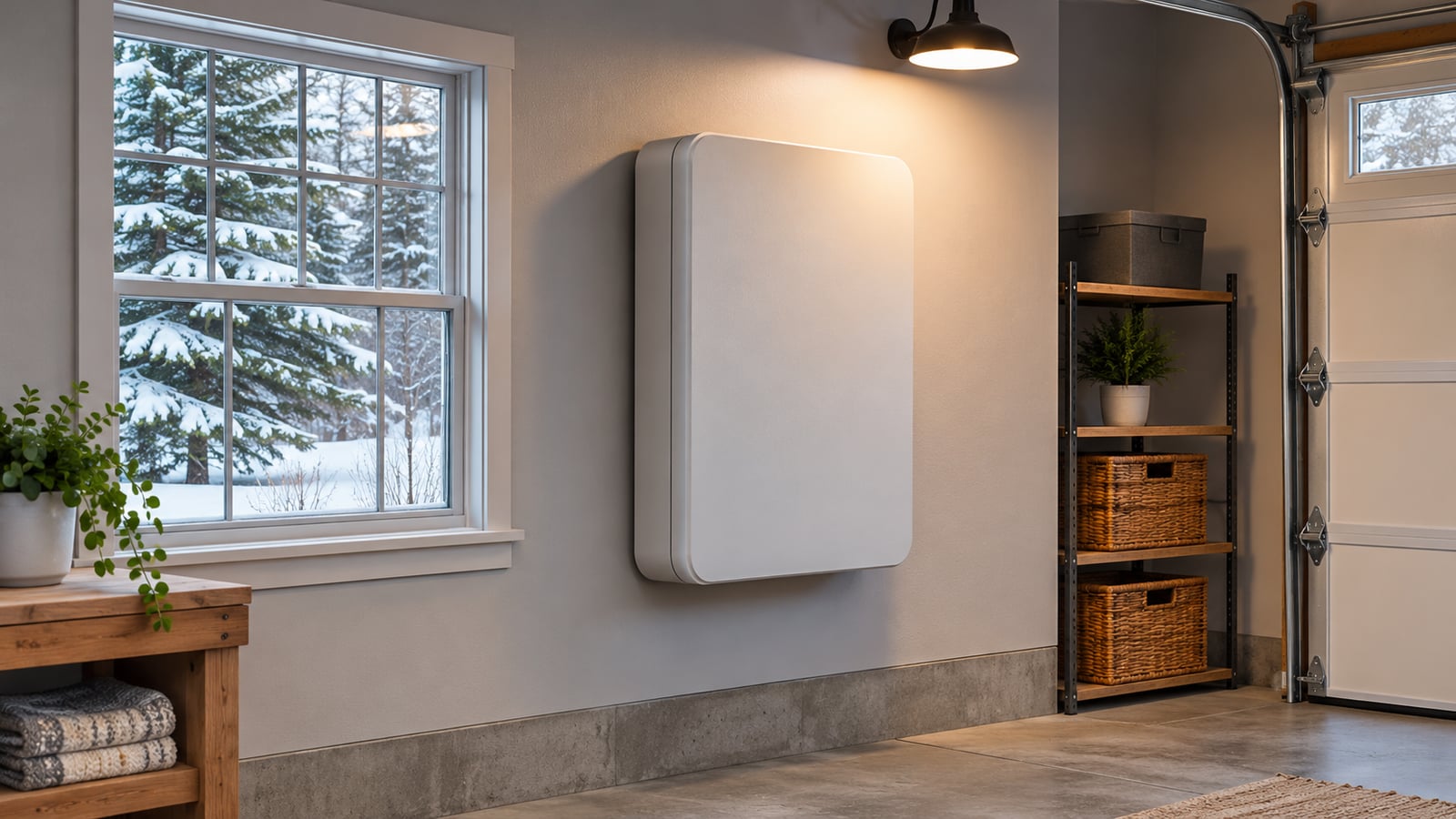
A garage, utility area, and exterior wall can experience different conditions. The assessment must also consider required clearances, access, structural mounting, electrical routes, and applicable installation rules. The warmest location is not automatically an approved location.
Discuss ordinary property use: snow storage, vehicle movement, drainage, and access for service. A location that is convenient on installation day may be difficult to reach during a winter outage.
Questions for the installer
- What temperature-related limits apply to this model?
- Can charging or output be reduced under expected conditions?
- What site conditions could take the equipment outside its permitted range?
- How will the owner recognize a temperature-related status or alert?
- What approved response is recommended if the system pauses or limits operation?
Do not improvise thermal fixes
Do not wrap equipment, add an unapproved enclosure, place heaters against it, or obstruct clearances to keep it warm. Such changes can interfere with the design or create hazards. Consult the manufacturer and installer for approved arrangements.
Likewise, do not repeatedly override settings or clear alerts when the system reports a temperature condition. Record the indication and follow the model-specific owner guidance.
Plan winter energy demand
Even when the battery operates normally, winter loads can change runtime. Electric heating, pumps, and other equipment may use a different energy profile than in summer. Solar recharging, if included, also has seasonal limits. Review a realistic winter scenario rather than relying only on an annual average.
Christopher Power Systems can discuss Enphase storage siting and backup planning for eligible northern Wisconsin properties. Ask for the temperature assumptions and winter load priorities to be included in the proposed design.
Cold-weather siting and operating limits?
Every property is different. Get guidance specific to yours.
Frequently Asked Questions
Straight answers to what homeowners and businesses ask us most.
No. The exact product, site conditions, installation requirements, and expected temperatures determine suitability.
Not necessarily. Manufacturers may specify performance reductions within portions of the operating range.
Only if explicitly supported by the manufacturer and approved installation design. Do not improvise an enclosure or heating arrangement.
Related services
Serving these communities
Sun or storms, we have you covered
Get a free, no-pressure power assessment tailored to your property and priorities.