Charging an EV With Solar: Timing and System Design
Solar can offset some of the electricity used to charge an EV, but the result depends on generation, charging time, vehicle demand, and the electrical design.
Quick answer
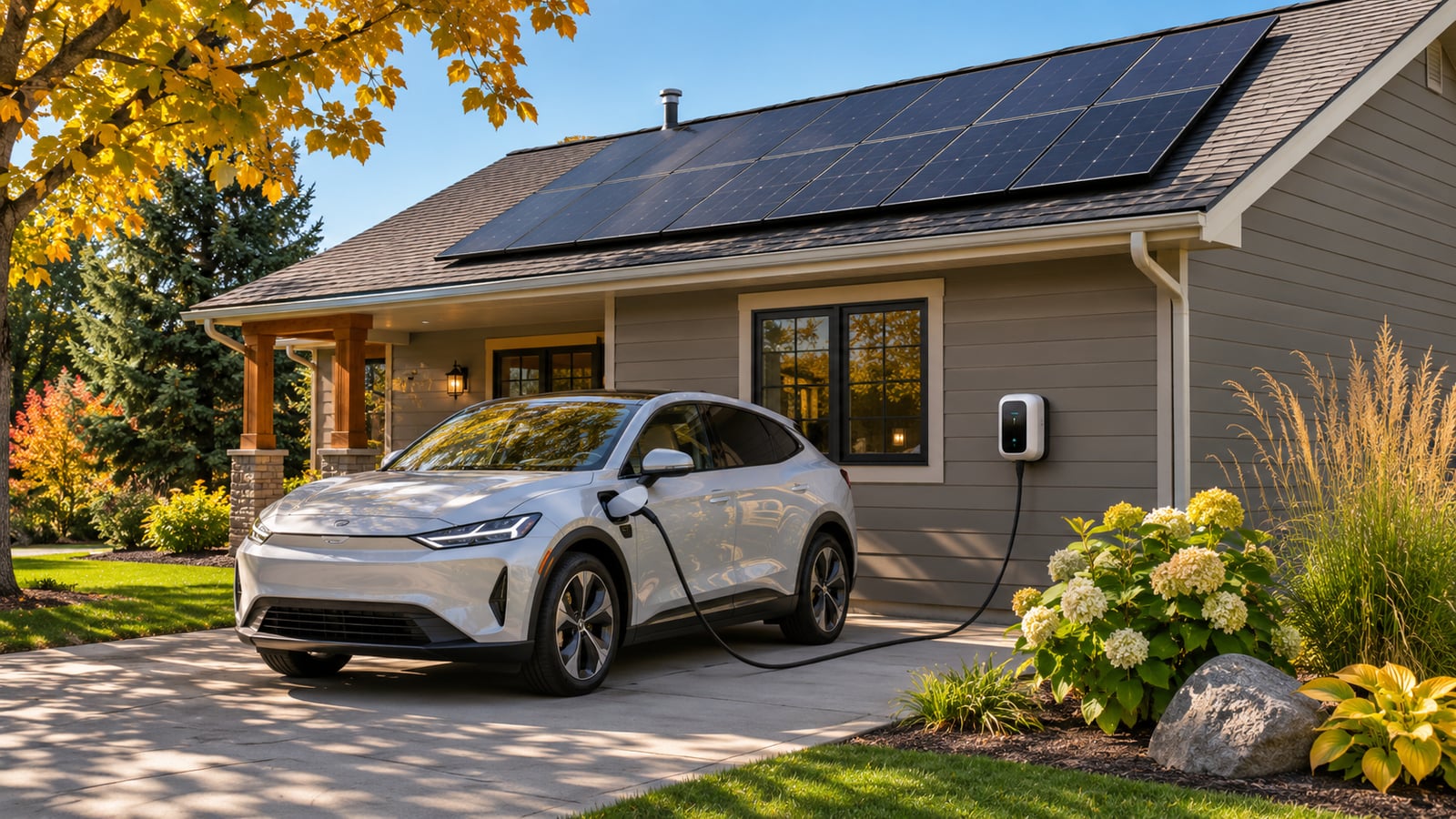
Solar can offset some of the electricity used to charge an EV, but the result depends on generation, charging time, vehicle demand, and the electrical design. Daytime charging can align with solar production when the vehicle is home. Charging after sunset generally relies on the grid or appropriately designed storage, not sunlight produced earlier unless it was stored.
Separate energy matching from direct power flow
Annual solar production and annual vehicle consumption can be compared for planning, but matching those totals does not mean every charging session uses solar at that moment. A vehicle parked away from home during sunny hours may charge mainly at night.
Utility billing and export treatment also affect the financial result. Do not assume exported daytime energy is credited at the same value as electricity imported later. Verify the current tariff for the property's utility and account.
Build a combined load and production profile
- Typical vehicle energy needs and home parking hours.
- Household electricity use before adding the EV.
- Expected solar production by season and time of day.
- Charger rate and any approved energy-management arrangement.
- Whether storage is intended for everyday shifting, outage backup, or both.
These inputs help distinguish a solar sizing decision from a charging installation decision. Both need to work together, but they are not the same calculation.
A practical scheduling example
A vehicle parked at home during part of the day may be able to use charging schedules that overlap solar output. A commuter returning after dark may need a different strategy. Neither schedule guarantees zero grid use, and cloudy weather changes the available generation.
This is an illustrative comparison, not a savings forecast. The best schedule also needs to leave the vehicle ready when the driver needs it.
Do not assume outage charging
A grid-connected solar installation does not automatically operate during an outage. Even a battery-backed home may not include the EV charger in its backup circuits. Charging a vehicle can also use energy that the household wants to reserve for refrigeration, lights, or other essentials.
Ask the designer to explain outage priorities explicitly. Vehicle-to-home backup is a separate capability requiring compatible equipment and design; ordinary Level 2 charging should not be presented as providing it.
Plan the project as one system
Christopher Power Systems offers solar, energy storage, and Level 2 charging services. Share both the driving routine and household energy goals. Ask for a proposal that distinguishes solar production estimates, charger configuration, battery purpose, and utility assumptions.
If projects will be phased, document what is being prepared now and what remains a future compatibility question. A vague “battery ready” or “EV ready” label should be explained in concrete equipment and installation terms.
Aligning daytime generation with vehicle demand?
Every property is different. Get guidance specific to yours.
Frequently Asked Questions
Straight answers to what homeowners and businesses ask us most.
Panels do not generate from sunlight after dark. Night charging uses another source, such as the grid or appropriately configured stored energy.
It changes the energy assessment, but roof suitability, utility rules, budget, and the desired offset still matter.
Do not assume so. Bidirectional backup requires specific vehicle, equipment, and electrical-system compatibility.
Related services
- EV & Energy StorageHow EV charging and battery storage fit together with your home's electrical system.
- Solar InstallationGrid-connected solar designed around your property, built on Enphase microinverter technology.
- Energy StorageEnphase battery storage that stores electricity for backup and later use, depending on system design.
Sun or storms, we have you covered
Get a free, no-pressure power assessment tailored to your property and priorities.