What Size Propane Tank Does a Standby Generator Need?
The right propane tank for a standby generator depends on more than how many gallons you want to store.
Quick answer
The right propane tank for a standby generator depends on more than how many gallons you want to store. The generator's fuel demand, other propane appliances, cold-weather vapor delivery, refill access, and desired outage duration all matter. Have the generator installer and propane supplier coordinate the design before selecting a tank.
Storage capacity and delivery capacity differ
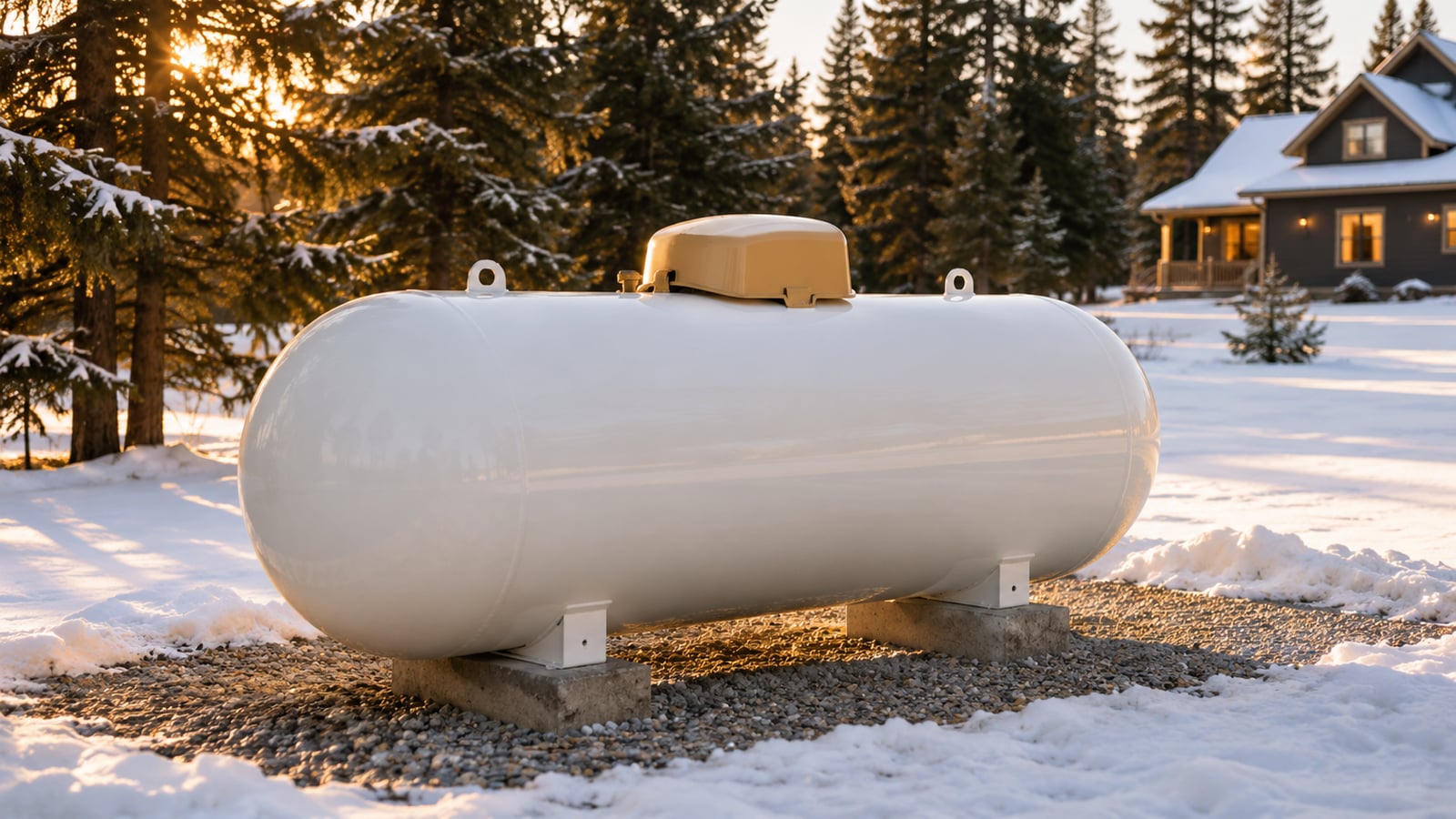
A tank stores fuel, but the system must also deliver that fuel at the required rate and pressure. A large stored quantity does not by itself prove the generator will receive adequate supply when demand is high. Temperature and tank conditions can affect vapor delivery, which is why northern Wisconsin planning should include the supplier's cold-weather design assessment.
The generator's installation documentation establishes fuel requirements for that model. The supplier and installer evaluate the tank, regulators, piping, and other connected appliances against those requirements. This is not a homeowner calculation based on a generic internet chart.
Questions to resolve together
- Is the tank dedicated to the generator or shared with heating, cooking, or water heating?
- What electrical load and outage duration are you planning for?
- What fuel demand occurs when the generator and other appliances operate together?
- Can the delivery truck reach the tank during winter conditions?
- Who owns or leases the tank, maintains the supply equipment, and handles refills?
Why an existing tank may need review
Suppose a property already uses propane for winter heating. Adding a generator increases demand precisely when the heating system may also be working hard. Existing storage may be adequate, inadequate, or require changes to delivery components; the answer needs an assessment rather than an assumption.
Likewise, an occasional-use cabin and an occupied home can have different outage priorities. A cabin owner may prioritize temperature protection and a well pump, while another household needs more continuous loads. Explain the intended use before asking for a tank recommendation.
Include placement and access
Tank location, generator location, clearances, site conditions, and fuel routing need to be planned together. Requirements come from the applicable equipment instructions, fuel supplier, and authorities. Do not use a single universal setback copied from another model or municipality.
Preserve access for service, delivery, and snow management. Avoid planning a layout that is technically convenient in summer but routinely blocked in winter. Confirm responsibility for keeping access clear and for checking inventory between visits to a seasonal property.
Ask for a coordinated proposal
Request a generator installation scope and a separate, clear fuel-supply scope where different providers are involved. Confirm what each party will verify before startup. Christopher Power Systems can discuss the electrical and generator side of the project and coordinate the information needed for fuel planning.
Fuel delivery and winter supply planning?
Every property is different. Get guidance specific to yours.
Frequently Asked Questions
Straight answers to what homeowners and businesses ask us most.
No single tank size fits every generator, climate condition, shared load, and runtime objective. The supplier must evaluate the actual installation.
Possibly, after demand, pressure, piping, regulator, and tank suitability are checked by qualified professionals.
Not necessarily. Storage and delivery performance are separate design considerations.
Related services
Serving these communities
Sun or storms, we have you covered
Get a free, no-pressure power assessment tailored to your property and priorities.