Solar Panels in Wisconsin Snow: Setting Winter Expectations
Solar panels can generate electricity in cold weather when sunlight reaches them, but shorter days, lower sun angles, and snow coverage can reduce winter production.
Quick answer
Solar panels can generate electricity in cold weather when sunlight reaches them, but shorter days, lower sun angles, and snow coverage can reduce winter production. Plan around seasonal output rather than assuming summer performance continues through a Wisconsin winter. Snow management must also respect roof safety and equipment instructions.
Cold temperature and available sunlight are different
Cold air does not mean there is no solar resource. At the same time, a cold sunny day and a snow-covered array are not equivalent conditions. The production estimate should consider the actual site, orientation, shading, and seasonal weather rather than rely on a simple “solar works in winter” claim.
Ask the installer to show monthly production expectations. An annual total can hide the difference between summer surplus and winter demand, especially in a home with electric heating or an EV.
Include snow in the site discussion
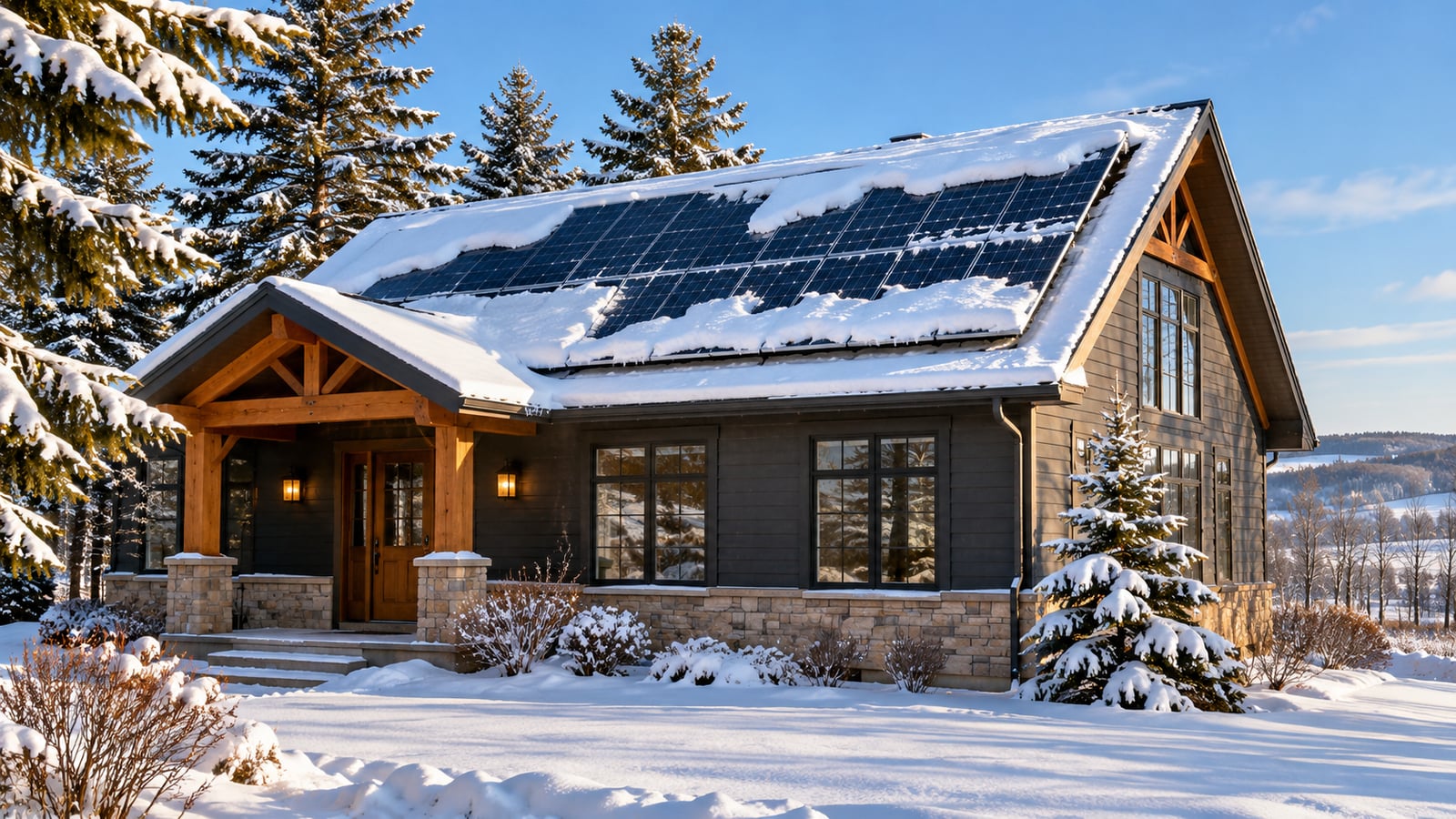
Roof geometry, panel arrangement, exposure, and safe access can affect how snow accumulates and clears. Snow sliding from an array can also affect areas below. The design should consider entrances, walkways, equipment, and normal property use.
Do not choose roof pitch or layout from a generic online recommendation alone. Structural conditions, mounting requirements, roof geometry, and the complete production model must be evaluated together.
What owners can observe safely
- Whether monitoring is current and production changes align with weather.
- Visible snow coverage from a safe ground-level position.
- New shading or obstructions around the property.
- Any equipment alert that persists after ordinary conditions improve.
Do not climb an icy roof or reach around electrical equipment to remove snow. Follow manufacturer and installer guidance before considering any cleaning or removal method.
Plan winter energy needs separately
If solar is paired with batteries, lower winter generation can affect how quickly storage recharges. A battery's capacity does not guarantee that winter solar will replenish it during every extended outage. Include essential-load priorities and an honest assessment of low-generation periods.
For a seasonal property, clarify whether the goal is reducing annual electricity purchases, supporting selected backup loads, or both. These goals can lead to different designs and expectations.
Use a regional forecast responsibly
Christopher Power Systems serves eligible communities in northern Wisconsin and can discuss solar planning for local property conditions. Ask for a site-based estimate with winter assumptions stated clearly. Do not accept a production promise based only on another state's climate or a summer photograph.
Keep actual monthly production records after installation. Over time, they help distinguish normal seasonal variation from changes that deserve review, while acknowledging that weather differs from year to year.
Seasonal production and safe snow planning?
Every property is different. Get guidance specific to yours.
Frequently Asked Questions
Straight answers to what homeowners and businesses ask us most.
No. Sunlight availability and equipment conditions matter. Cold weather alone does not mean zero generation.
Do not use improvised tools or unsafe roof access. Consult the equipment and installer guidance.
No. Generation, weather, stored energy, loads, and system configuration all affect the result.
Related services
Serving these communities
Sun or storms, we have you covered
Get a free, no-pressure power assessment tailored to your property and priorities.